

There are moments in public life when voters are not looking for bold promises or dramatic gestures. They are looking for reassurance.
Not reassurance in the sense of complacency—but reassurance that the institutions we rely on still understand their purpose. That the people entrusted with authority know how to wield it with restraint. That justice, when it is delivered, does not leave behind collateral damage to dignity.
This judicial race is one of those moments.
At its core, it is not about ideology or personality. It is about standards.
A Judge Shaped by Experience, Not Ambition
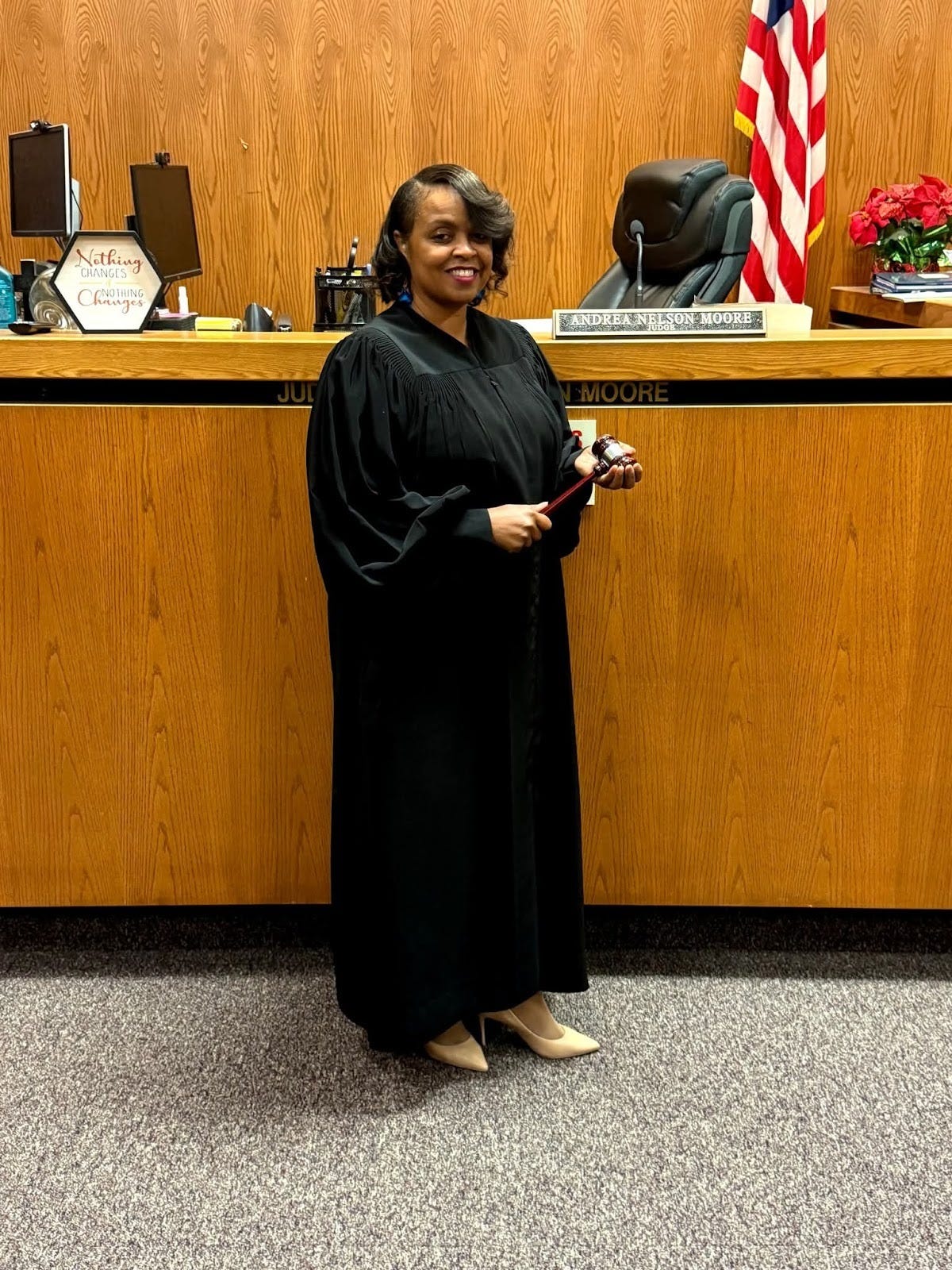
Judge Andrea Nelson Moore has known she wanted to be a judge since childhood—not because of prestige or power, but because of a moment that never left her.
As a young girl, she watched a family member suffering from severe mental illness move through a criminal justice system that showed little regard for his humanity. The experience planted a conviction early: that the courtroom should never be a place where people are reduced, dismissed, or treated as less than human—no matter the circumstances.
That conviction did not harden into cynicism. It matured into purpose.
Years later, after earning degrees in psychology and law, serving as a prosecutor, defense intern, judicial staff attorney, deputy inspector general, assistant law director, and ultimately as a judge herself, Moore arrived on the bench with something many jurists lack: a deep understanding of how systems affect real people on all sides.
Temperament Matters—Especially When No One Is Watching
Good judging is rarely flashy. It is disciplined. It is careful. It is often quiet.
Moore’s approach reflects that reality. She speaks plainly about what justice requires: clarity, consistency, and impartiality. She believes opinions should be written so they can be understood—not just cited. She believes access to justice applies equally to attorneys and people representing themselves. She believes that justice delayed is justice denied.
Most importantly, she believes that how power is exercised matters just as much as the outcome itself.
In an era when courtrooms sometimes become the story, Moore represents a different philosophy: that the judge’s role is not to dominate the space, but to steward it.

Fairness Is Not a Slogan—It’s a Practice
Moore does not promise that everyone will agree with her decisions. She promises something more fundamental.
That people will be heard.
That they will be treated with dignity.
That the rule of law—not ego, bias, or external pressure—will guide the outcome.
Her record reflects an understanding that justice must account for context without abandoning principle; that public safety and community trust are not opposing goals; and that recognizing mental illness, poverty, and structural inequity is not weakness—it is realism.
These are not abstract positions. They are the product of lived experience, professional breadth, and an unwavering belief that courts should not deepen harm where fairness is possible.
Why This Moment Calls for Steady Hands
This election arrives at a time when confidence in institutions feels fragile. When voters are paying closer attention not just to what officials do, but how they do it.
In that environment, leadership looks less like grandstanding and more like grounding.
Judge Andrea Nelson Moore offers a vision of the judiciary that is calm, competent, and centered on humanity. She is not running to make headlines. She is running to do the work the right way—consistently, thoughtfully, and with respect for the people whose lives intersect with the court system.
Some races are about choosing sides.
Others are about choosing standards.
This is one of those races.