

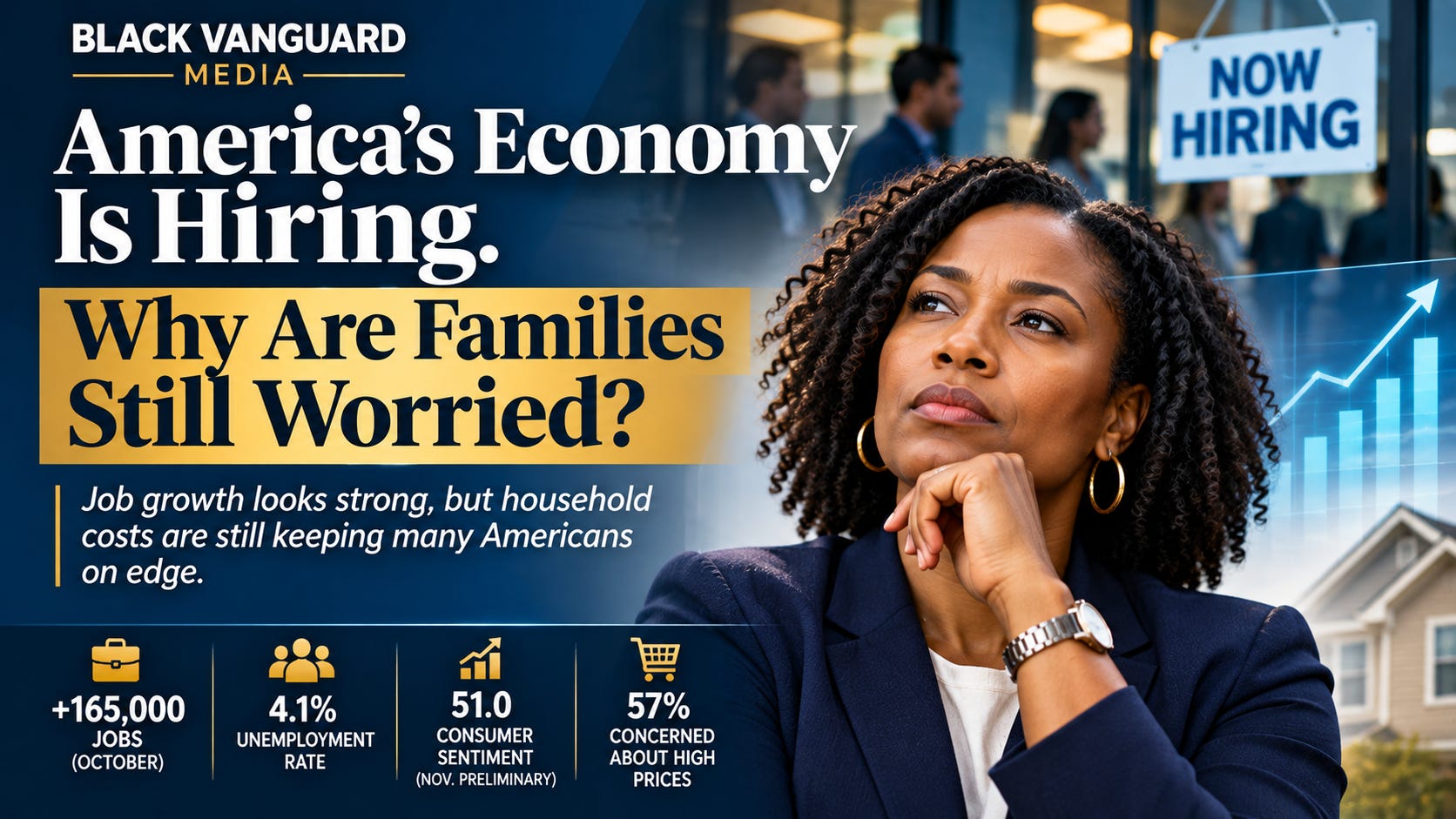
WASHINGTON — The American economy is sending two very different messages.
Employers are continuing to hire, suggesting that businesses still need workers and that economic activity remains resilient. Yet consumers are expressing persistent concerns about inflation, household finances and what lies ahead.
Recent employment figures and the University of Michigan’s consumer sentiment surveys have brought that divide into sharper focus.
The contradiction raises a question that cannot be answered by counting jobs alone: If the economy is doing well, why do so many Americans remain worried about their financial future?
Part of the answer is that employment and financial security measure different things.
A person can have a job, receive regular paychecks and still struggle to afford housing, groceries, utilities, transportation and healthcare.
For millions of households, economic stability depends less on whether employers are hiring nationally than on how much money remains after the bills are paid.
A Job Is Not the Same as Financial Security
Employment reports provide important information about the economy. They measure payroll growth, unemployment and changes in earnings.
But those figures do not fully capture the financial pressures facing individual households.
Consider a worker whose wages increase 3% while housing, insurance and other essential expenses consume a growing share of the family budget.
That worker may be earning more money without feeling any more financially secure.
Inflation also creates a lasting affordability problem.
Even when the inflation rate slows, prices generally do not return to their earlier levels. A family paying considerably more for groceries than it did several years ago may experience little relief from an announcement that inflation has moderated.
Slower inflation means prices are rising less rapidly. It does not necessarily mean living expenses are falling.
What Consumer Confidence Reveals
The University of Michigan’s consumer sentiment survey offers another perspective on economic conditions.
Unlike employment statistics, which measure activity in the labor market, consumer sentiment examines how Americans view their personal finances, business conditions and the broader economic outlook.
The survey also tracks expectations about future inflation.
When consumers express anxiety despite continued hiring, it can indicate that concerns about purchasing power, job security or future expenses are outweighing the benefits of a relatively active labor market.
Consumer sentiment is not a direct measurement of household income or financial hardship. People’s responses can also be influenced by political attitudes, news coverage and expectations about the future.
Nevertheless, the survey captures something employment statistics cannot: how consumers believe the economy is affecting their lives.
The Pressure on Employers and Small Businesses
Businesses are experiencing their own version of the same economic tension.
Employers may need additional workers while simultaneously facing higher costs for insurance, electricity, rent, equipment and financing.
Small businesses are particularly sensitive to those expenses because they often operate with narrower margins and fewer financial reserves.
A restaurant might need another employee to serve customers but hesitate to hire because its operating costs have increased.
A neighborhood retailer might report steady sales while earning less profit because inventory and overhead expenses have risen.
Those pressures can affect wages, staffing decisions and the prices consumers ultimately pay.
Economic activity can remain strong even when the financial benefits are unevenly distributed.
Why the Differences Matter for Black Households
National economic averages can also conceal significant differences among communities.
Federal Reserve research has documented persistent disparities in household wealth, with Black families holding substantially less median wealth than white families.
That difference matters during periods of elevated living costs.
Households with greater savings and assets generally have more flexibility to absorb unexpected expenses. Families with limited financial reserves may have fewer options when rent increases, a vehicle requires repairs or an emergency interrupts earnings.
Differences in homeownership, access to credit and accumulated wealth can therefore influence how households experience the same national economy.
Community organizations working with families facing housing instability, food insecurity and other financial challenges provide an important perspective that is not always visible in headline economic indicators.
Measuring an Economy That Works for Households
Stronger hiring remains welcome economic news. Employment provides income, supports consumer spending and creates opportunities for advancement.
But job creation alone cannot establish whether families are becoming more financially secure.
That requires examining wage growth after inflation, housing affordability, household debt, savings, healthcare expenses and the ability to handle financial emergencies.
It also requires asking whether economic gains are reaching households across different income levels and communities.
The distinction is important for policymakers, employers and local economic-development organizations.
An economy can create jobs without creating enough financial breathing room for the people filling them.
The real measure of economic progress is not simply how many Americans are working.
It is whether their work allows them to build stable, financially secure lives.