

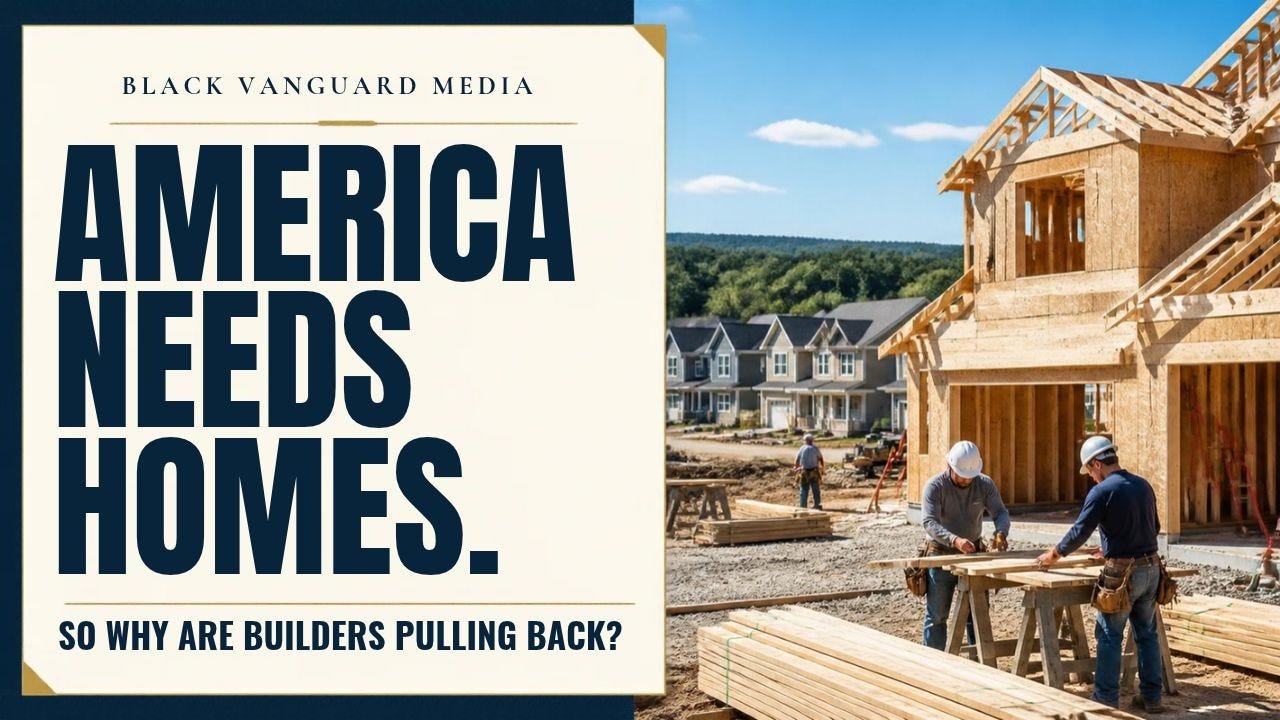
WASHINGTON — America needs more housing. But the companies responsible for building it are becoming increasingly reluctant to take the financial risk.
Homebuilder confidence fell to its lowest level since June 2012, according to the National Association of Home Builders and Wells Fargo. Their Housing Market Index dropped three points to 29 in October, far below the reading of 50 that separates generally positive conditions from negative ones.
The decline reflects a troubling contradiction in the housing market. The country faces a persistent shortage of homes, yet the cost of producing and financing new housing is discouraging construction.
For smaller builders, the challenge can be particularly severe.
Unlike major national developers, smaller construction companies often lack the cash reserves, purchasing power and financing flexibility needed to absorb rising costs or prolonged delays.
A project that appears profitable when construction begins can become financially unattractive before the first buyer moves in.
The latest NAHB survey found that 43% of builders reduced home prices in October, the highest share recorded during the 2020–2026 period. Nearly two-thirds offered sales incentives to attract buyers.
Those discounts may help sell existing inventory, but they also reduce the financial margins builders depend on to fund future projects.
Mortgage rates have climbed above 7%, making monthly payments more expensive for prospective homeowners. Meanwhile, builders are confronting higher prices for construction materials, energy, land and financing.
The pressure extends well beyond large development companies.
Independent contractors, electricians, plumbers, roofers and other small businesses depend on a steady pipeline of construction projects. When builders postpone developments, the economic consequences spread through local supply chains.
The Economics of Building Affordable Homes
The affordability crisis is not simply about finding buyers who need housing. It is about producing homes at prices those buyers can afford while allowing builders to recover their costs.
Land acquisition, site preparation, utility connections, permits, labor, materials and financing must all be paid for before a completed home generates revenue.
NAHB estimates that the United States faces a structural shortage of approximately 1.2 million homes.
Yet adding that supply has become increasingly difficult.
In congressional testimony earlier this year, NAHB Chairman Bill Owens reported that construction material costs had increased more than 46% since February 2020. He also cited regulatory costs representing approximately one-quarter of the price of a new single-family home.
Those estimates come from the industry’s trade association, which advocates for reducing regulatory barriers. Local conditions vary, and some building requirements also provide important safety, environmental and consumer protections.
Nevertheless, the underlying financial problem is substantial.
Consider a builder whose total cost to produce a modest home approaches the maximum price local buyers can qualify to finance. Even a small increase in land, labor or borrowing costs can eliminate the project’s expected profit.
The builder may respond by postponing construction, pursuing higher-priced homes or leaving the market entirely.
None of those outcomes increases the supply of affordable starter homes.
A Workforce Problem That Financing Alone Cannot Solve
Construction also faces a shortage of skilled workers.
NAHB estimates that the residential construction industry needs hundreds of thousands of additional workers annually to replace retiring employees, account for departures and meet projected demand.
The shortage affects trades such as framing, electrical work, plumbing and roofing.
Recent immigration enforcement activity has added uncertainty in some construction markets. NAHB reported that more than one-third of builders surveyed in October had experienced enforcement activity in their markets during the previous month, contributing to delays and concerns about labor availability.
The result can be longer construction schedules and higher costs.
That presents an opportunity for workforce-development organizations, community colleges, apprenticeship programs and smaller construction businesses capable of training and employing skilled workers.
But expanding the workforce requires more than short-term training grants. Employers need reliable project pipelines, and workers need opportunities to earn sustainable wages.
Who Gets to Participate in the Housing Economy?
Housing development also raises questions about business ownership and access to opportunity.
Large developers frequently have established relationships with lenders, investors and suppliers. Smaller firms, including minority-owned construction companies, may have fewer financing options and less capacity to carry expenses while waiting for project payments.
These differences can determine who competes successfully for development contracts, acquires property or grows from subcontracting into ownership of larger projects.
Community development organizations face similar challenges when attempting to produce affordable housing.
Tax credits, public subsidies and favorable financing can make projects possible. But those resources cannot independently resolve a shortage of skilled contractors, expensive buildable land or construction budgets that exceed what future rents and sales prices can support.
Public investment may close financing gaps, but the homes still must be built.
The distinction matters for cities attempting to increase affordable housing production.
A successful housing strategy requires more than attracting investors. It must also address zoning, permitting, infrastructure, construction capacity and the ability of local businesses to participate in development.
Otherwise, communities may secure funding for projects that remain too expensive or difficult to complete.
The October confidence report offers little indication that conditions are improving quickly.
The index measuring prospective buyer traffic fell to 18, its lowest level since April 2012, excluding the initial pandemic disruption. Builders’ expectations for sales over the next six months also declined.
The housing shortage remains. What is weakening is the financial incentive and practical capacity to build the homes needed to address it.
For policymakers, lenders and economic-development leaders, that creates a larger question than how to make mortgages more affordable.
America must also determine how to make building homes financially viable—and how to ensure smaller construction businesses, local workers and community institutions can participate in meeting that demand.