

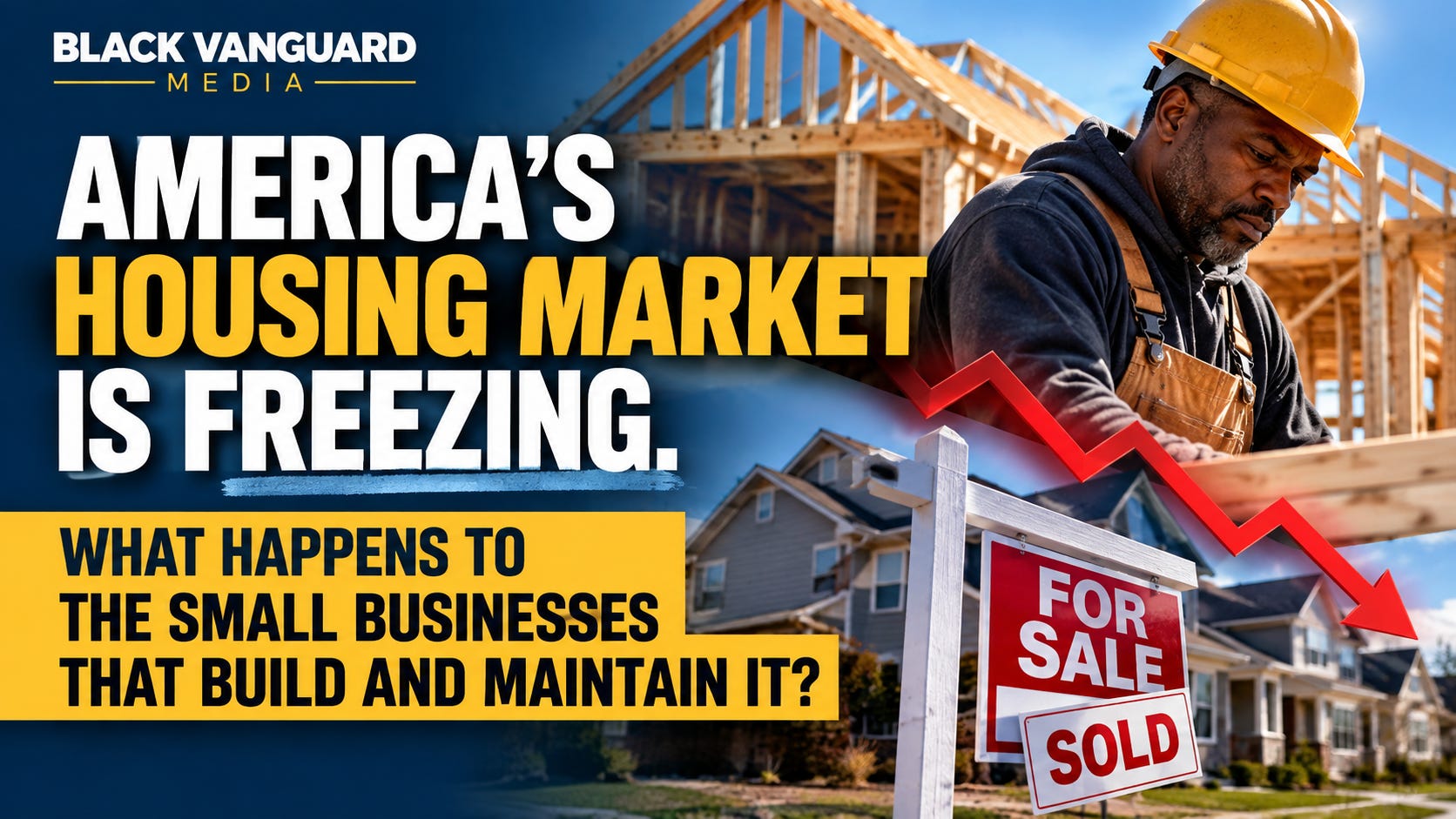
WASHINGTON — America’s housing slowdown is becoming a serious problem for more than people trying to buy or sell homes.
New housing data point to weakening demand and slower construction, threatening the smaller businesses that depend on residential development for their livelihoods.
Pending home sales fell 7.3% in September, according to the National Association of Realtors, pushing its index to 66.0, the lowest reading since the series began in 2001. Sales contracts declined in every region, falling 11.3% from a year earlier.
The Census Bureau also reported that housing starts declined 5.2% in September to an annualized rate of approximately 1.22 million units, down 7.4% from September 2025.
Although monthly construction figures can fluctuate, the broader slowdown reflects persistent affordability challenges, elevated borrowing costs and rising construction expenses.
The Businesses Behind Every Home
Residential construction supports far more than developers and real estate agents.
Electricians, plumbers, roofers, landscapers, truck drivers, equipment operators and building-material suppliers all depend on a steady flow of projects.
Many are independently owned businesses with limited reserves. When construction slows, contracts disappear while equipment payments, insurance and payroll obligations remain.
The National Association of Home Builders reported that builder confidence fell to 29 in October, its lowest level since June 2012. Nearly two-thirds of builders offered sales incentives, while 43% reduced prices.
Those discounts may attract buyers, but they also reduce the margins needed to finance future construction.
For smaller contractors, fewer projects can mean postponed hiring, reduced work hours or difficulty maintaining operations.
The Economic Impact Reaches Entire Communities
Housing construction generates employment, local purchasing and future property-tax revenue.
When development slows, communities can experience reduced demand for construction services, fewer business opportunities and delayed growth in their tax bases.
The effects are particularly significant for smaller construction firms that lack the financial flexibility of national developers.
A prolonged downturn could also push skilled workers into other industries, making it harder to rebuild construction capacity when demand returns.
Not every housing-related business faces the same conditions. Homeowners who cannot afford to move may invest in repairs and renovations, creating opportunities for maintenance contractors.
But remodeling activity cannot necessarily replace the economic contribution of new residential development.
Affordable Housing Faces an Additional Challenge
Community-based developers are confronting the same rising costs while attempting to produce homes affordable to lower- and middle-income households.
Land, labor, materials, permits and financing must all be paid for before a completed project generates revenue.
When buyers cannot qualify for mortgages at prices sufficient to cover those expenses, developments may be postponed or abandoned.
Public grants, tax credits and subsidized loans can help close financing gaps, but they cannot eliminate construction costs or guarantee project viability.
Smaller developers, including minority-owned construction companies seeking to move into property development, may face additional barriers involving collateral, lender relationships and working capital.
The result is a troubling contradiction: America needs more housing, but the financial conditions required to produce it are discouraging construction.
Preparing for a Prolonged Slowdown
For construction-related businesses, access to financing is only one part of financial readiness.
A company may qualify for a loan to purchase equipment or hire employees, but that investment becomes risky if customer demand continues weakening.
Owners must evaluate cash reserves, operating costs, project pipelines and their ability to withstand delayed payments.
Diversifying into maintenance, commercial construction or public infrastructure work may provide alternatives, although those markets carry their own requirements and risks.
The stakes extend beyond individual companies.
If smaller contractors close, skilled workers leave the industry and community developers abandon projects, the country could lose construction capacity precisely when more housing is needed.
America’s housing shortage has not disappeared. What is weakening is the economic incentive to build.
The challenge is no longer simply making homes affordable to purchase. It is also making them financially possible to build—and ensuring the small businesses responsible for that work can survive until demand returns.