

There are some conversations we keep having too late.
We wait until a child is failing in school.
We wait until a student is acting out.
We wait until a young person stops showing up.
We wait until a family is in crisis.
We wait until a tragedy forces everyone to admit what the signs were saying all along.
But what if we stopped waiting?
That is the power behind NAMI’s “Ending the Silence” program and why it connects so strongly to the message of Check Up from The Neck Up.
For too long, mental health has been treated like something people should only discuss after there is a breakdown. We teach young people how to take care of their teeth, their bodies, their grades, their sports performance, and even their social media image. But too often, we do not teach them how to understand what is happening in their own mind.
That has to change.
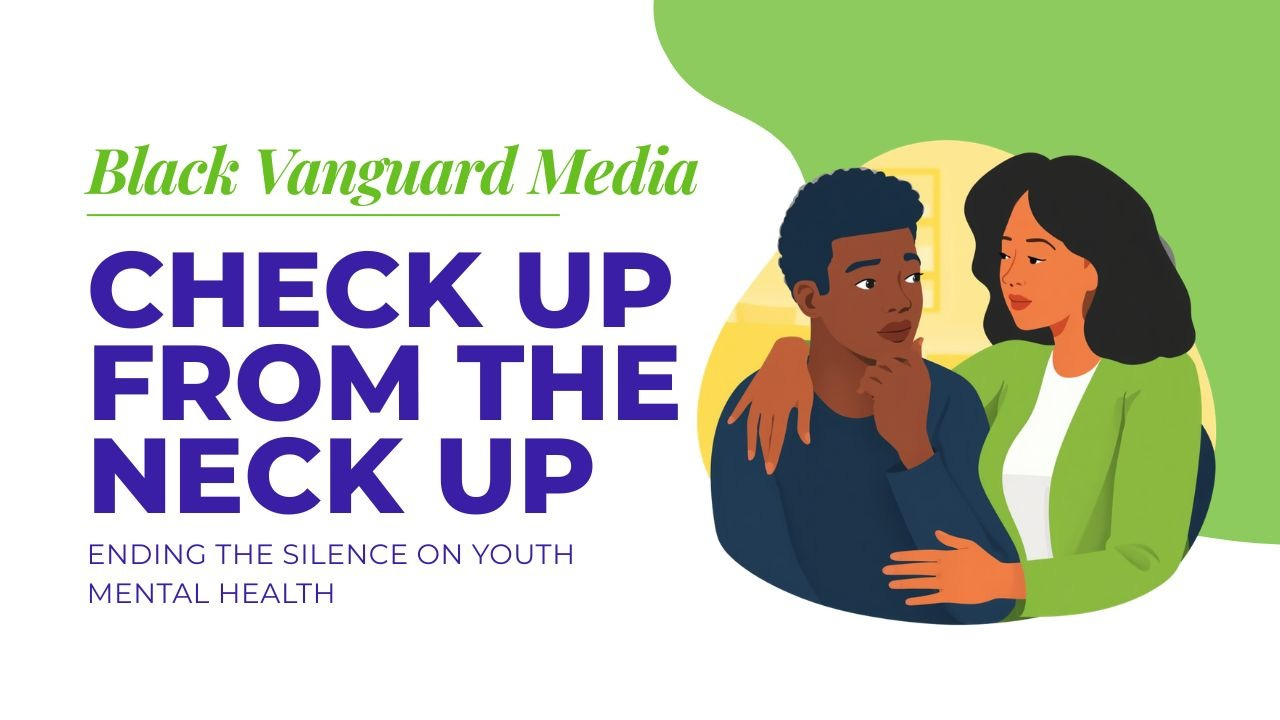
Check Up from The Neck Up is more than a slogan. It is a cultural reminder that mental health is health. It is a call for families, schools, churches, youth programs, coaches, mentors, and community leaders to stop treating emotional pain like weakness and start treating it like something that deserves attention, care, and support.
NAMI’s Ending the Silence program gives schools and communities a practical tool to do exactly that.
The program is designed for middle and high school students and covers the basics of mental health, the warning signs of mental health conditions, suicide awareness, how and where to get help, and personal recovery stories from young adults who have lived through mental health challenges themselves.
That last part matters.
Young people do not just need lectures. They need connection. They need to hear from someone who can say, “I have been there, and help made a difference.” They need to see that struggling does not make them broken. They need to know that asking for help is not shameful. It is wise. It is strong. It is necessary.
In many Black communities, the silence around mental health has deep roots. Some of it comes from survival. Some of it comes from stigma. Some of it comes from generations of being told to “pray it away,” “tough it out,” “stop acting crazy,” or “keep family business in the house.”
Faith, discipline, and family strength matter. But silence cannot be our strategy.
A young person can love God and still need counseling.
A student can come from a strong family and still experience depression.
A teenager can be gifted, funny, athletic, popular, or high-achieving and still be silently fighting anxiety, trauma, grief, or thoughts of suicide.
We cannot assume that a smile means someone is okay.
That is why mental health education must become normal, early, and accessible. We need students to learn the signs before they are overwhelmed by them. We need friends to recognize when a classmate may be in trouble. We need teachers and parents to know how to respond without judgment. We need schools to become places where young people can name what they are feeling before pain turns into crisis.
This is also an equity issue.
When mental health warning signs are misunderstood, Black children are too often punished instead of supported. A student dealing with trauma may be labeled disrespectful. A child with anxiety may be called defiant. A teenager struggling with depression may be dismissed as lazy. What should have triggered care sometimes triggers suspension, isolation, or involvement with systems that deepen the harm.
Ending the silence means changing that pattern.
It means asking better questions.
Not just, “What is wrong with you?”
But, “What happened?”
“What are you carrying?”
“Who do you trust?”
“What support do you need?”
“How can we help before this becomes a crisis?”
Check Up from The Neck Up should become part of the language of prevention. It should be something students hear in classrooms, youth groups, barbershops, beauty salons, churches, athletic programs, and community events. It should remind every young person that the mind deserves care just like the body does.
A physical checkup can catch a problem before it becomes life-threatening. A mental health checkup can do the same.
Programs like NAMI Ending the Silence help give young people the language to understand themselves and the courage to speak up. They help families recognize that mental health challenges are not moral failures. They help communities move from shame to support.
The goal is not to scare students. The goal is to prepare them.
Prepare them to recognize warning signs.
Prepare them to help a friend.
Prepare them to seek support.
Prepare them to believe recovery is possible.
Prepare them to understand that they are not alone.
For Black Vanguard Media, this issue is bigger than one program. It is about the future of our children and the health of our communities.
We cannot build strong families, strong schools, strong businesses, strong neighborhoods, or strong movements while ignoring the mental and emotional condition of the people carrying the weight.
The next frontier of community wellness is not only economic. It is emotional. It is psychological. It is spiritual. It is cultural.
We need to normalize the checkup before the breakdown.
We need to end the silence before silence becomes suffering.
And we need every young person to know this truth:
Your mind matters.
Your pain deserves care.
Your story is not over.
Help is real.
Healing is possible.
It is time for every school, every youth-serving organization, and every community leader to make mental health education part of the foundation.
Because sometimes the most important checkup is not from the neck down.
It is the Check Up from The Neck Up.