

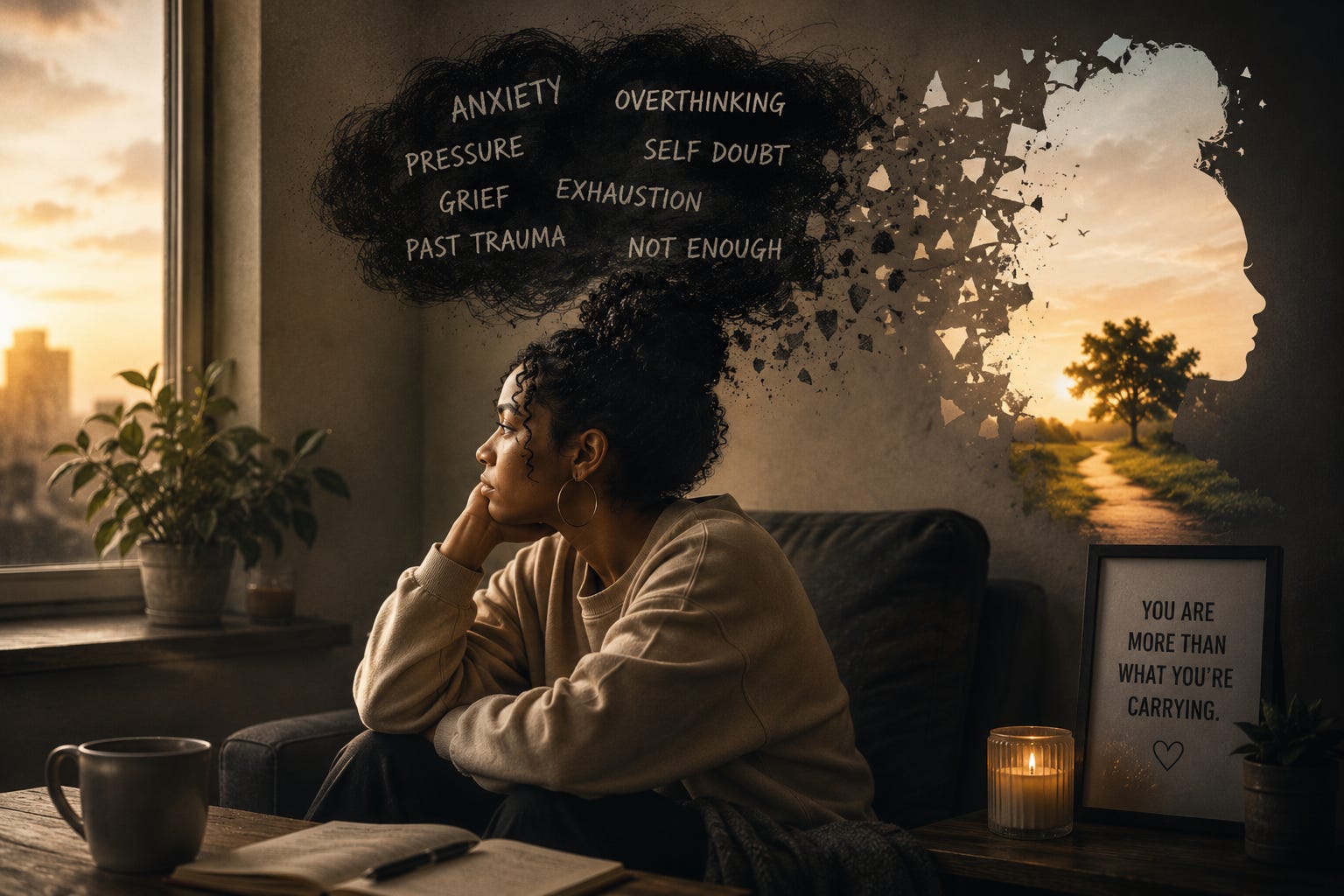
One of the quietest problems many people face is that they often wait until life feels unbearable before asking for help.
People wait until the stress becomes overwhelming. Until the relationship is falling apart. Until the anxiety becomes impossible to ignore. Until the exhaustion turns into emotional shutdown.
And by that point, many people are not simply trying to improve their mental health — they are trying to recover from months or years of carrying too much for too long.
But mental and emotional well-being was never supposed to work that way.
We do not wait until our entire body shuts down before going to a doctor. We do not wait until a small issue becomes a major emergency before paying attention to it. Yet when it comes to mental health, many people have been taught to ignore the warning signs until they can no longer function.
Part of that comes from stigma. In many communities, people still struggle to openly talk about stress, anxiety, depression, burnout, or emotional exhaustion without feeling judged. Some people fear being seen as weak. Others fear becoming a burden to those around them. And many people simply do not know how to start the conversation.
So instead, they stay silent.
They tell themselves they are just tired. That things will get better on their own. That they simply need to pray harder, work harder, or push through a little longer.
And while resilience matters, constantly ignoring emotional and mental strain can slowly wear people down.
Sometimes the signs are subtle at first. A person becomes more withdrawn. More irritable. Less motivated. They stop answering calls. They isolate themselves. They lose interest in things they once enjoyed. They become emotionally distant from the people around them.
Often, those changes are brushed off as mood swings, stress, or personality shifts.
But sometimes they are signs that someone is struggling more deeply than they know how to express.
That is why checking in matters.
Not just during moments of crisis, but before things reach that point.
A real Check up from the Neck up is about creating a culture where people feel comfortable having honest conversations about how they are doing mentally and emotionally. It is about normalizing therapy, mentorship, support systems, and emotional honesty instead of treating them as something shameful.
It is also about learning how to check in on other people intentionally.
Not the automatic “How are you?” people ask in passing.
But real conversations.
The kind where people feel safe enough to answer honestly.
Because the truth is, many people are carrying things that nobody around them fully sees. Grief. Fear. Financial pressure. Loneliness. Family stress. Disappointment. Burnout.
And sometimes what helps people most is simply knowing they do not have to carry those things alone.
Communities become healthier when people stop feeling like vulnerability is weakness. When people feel safe asking for help before they completely break down. When checking in on each other becomes normal instead of unusual.
That does not mean every conversation will solve everything overnight.
But small moments of honesty, support, and connection can prevent people from feeling isolated in the middle of what they are going through.
And maybe that is one of the most important shifts we can make moving forward.
Not waiting until people are in crisis before we pay attention to their mental and emotional well-being.
But building communities where checking in becomes part of how we care for one another every day.