

CLEVELAND — For approximately 50 years, Cleveland has relied on federal funding to support the nonprofit organizations responsible for helping revitalize its neighborhoods. That arrangement could soon undergo a significant transformation.
On Tuesday, November 24, Cleveland City Council’s Development, Planning and Sustainability Committee advanced Ordinance 1393-2026, legislation sponsored by Councilman Kris Harsh that would fundamentally change how the city funds its Community Development Corporations, commonly known as CDCs.
For residents concerned about abandoned properties, deteriorating housing, struggling businesses and the lack of investment in their neighborhoods, this legislation deserves attention.
It could change not only how money reaches neighborhood organizations, but also what those organizations can accomplish and how the public holds them accountable.
Changing Where the Money Comes From
Since the 1970s, Cleveland has used a portion of its federal Community Development Block Grant funding to support CDC operations.
The federal program, administered by the U.S. Department of Housing and Urban Development, provides resources to address economic distress, deteriorating housing and other community development needs.
Over time, however, Cleveland’s CDC contracts have become increasingly restrictive. Most now primarily support two activities: housing rehabilitation assistance and technical assistance to qualifying businesses.
That leaves many neighborhood organizations performing necessary work for which they cannot easily obtain reimbursement.
The proposed solution is what city officials are calling a funding swap.
Instead of relying on federal dollars to fund routine CDC operations, Cleveland would use money from its own General Fund. The federal dollars would remain available for other eligible community development projects.
The intention is to give neighborhood organizations greater flexibility while allowing the city to use federal funding more effectively.
More Money and Earlier Payments
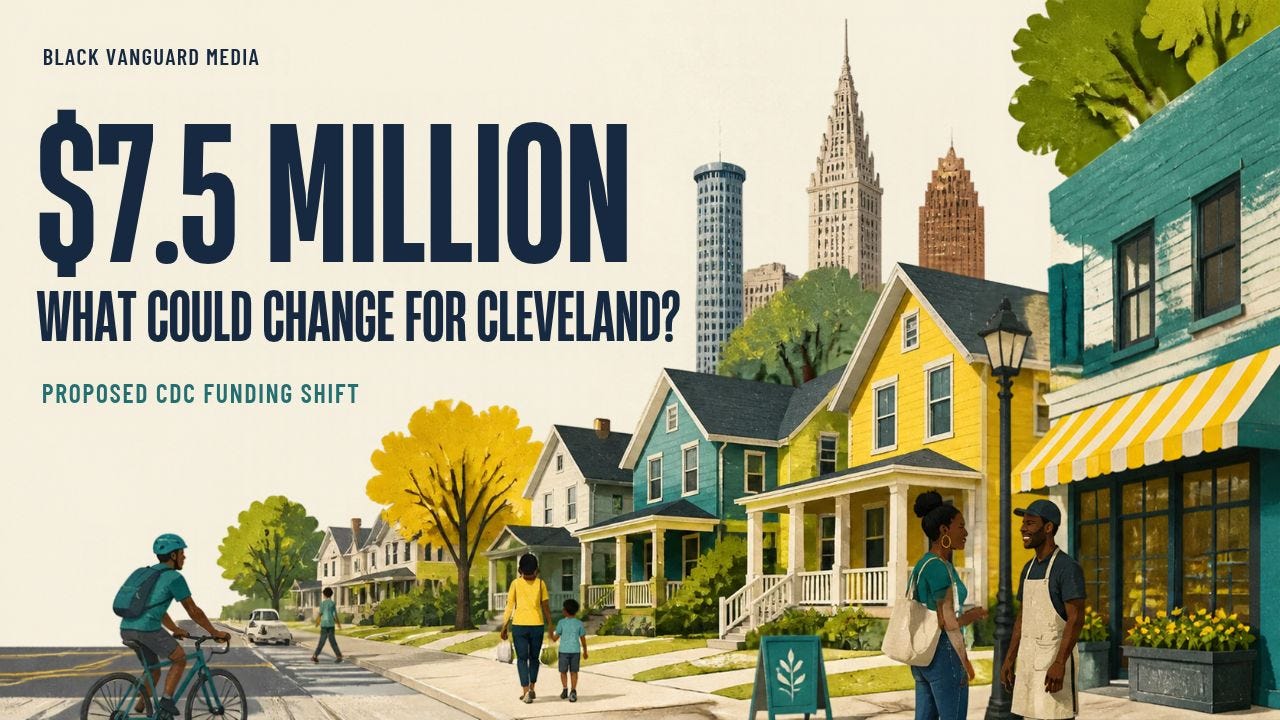
Under the proposal discussed Tuesday, the annual allocation available to each council member for neighborhood development would increase from approximately $435,000 to $500,000.
Across Cleveland’s 15 wards, that represents a proposed annual allocation of $7.5 million.
It does not mean every CDC would automatically receive $500,000. Some wards are served by multiple organizations, while some organizations serve more than one ward.
Perhaps equally important is when the organizations would receive their money.
Currently, CDCs often begin their fiscal year in July but may not receive their first city reimbursement until November or December. During those months, they must find other resources to cover payroll and operating expenses.
David Robinson, executive director of Old Brooklyn CDC, explained during the hearing that his organization has had to rely on a line of credit to cover expenses while awaiting city reimbursements.
That means paying interest simply to continue serving the community.
Under the proposed system, CDCs would receive 25 percent of their approved contract amount within 30 days of contract execution.
An organization with an approved $500,000 contract, for example, would receive an initial payment of $125,000.
Earlier payments could help organizations retain qualified employees, reduce borrowing expenses and maintain consistent neighborhood services.
What Could CDCs Do Differently?
The proposed legislation recognizes five broad areas of community development: housing and economic development, community planning, partnerships, neighborhood marketing and community engagement.
During Tuesday’s discussion, officials offered examples of programs that could become possible under a more flexible funding arrangement.
These included transportation services to help senior citizens reach grocery stores, neighborhood beautification, leadership development, farmers markets and greater cooperation between neighborhood organizations.
The proposed structure would allow CDCs and council members to establish priorities based on the specific needs of their communities.
Organizations would develop work plans, prepare budgets, request funding and agree upon the services and accomplishments expected during the contract period.
The idea is to give neighborhoods greater influence over the work being performed rather than allowing federal funding restrictions to dictate most of that work.
Residents Could Gain Greater Access to Information
One of the most revealing portions of Tuesday’s meeting involved accountability.
Several council members expressed frustration about the difficulty of determining what neighborhood organizations had accomplished, whether reported activities reflected actual conditions and whether public investments were producing meaningful results.
Under the proposed system, CDCs would submit monthly performance reports that would become part of the public record.
Residents could review those reports through Cleveland City Council’s online legislative system. Failure to submit required reports could result in payments being withheld.
For the public, this could provide a better opportunity to understand what their neighborhood organizations are being paid to accomplish and whether they are delivering.
Equal Funding Does Not Necessarily Mean Equitable Investment
Although the proposed $500,000 allocation per ward received considerable attention, another important discussion emerged concerning Cleveland’s historically disinvested neighborhoods.
Councilman Richard Starr questioned whether distributing equal amounts across wards adequately addresses communities experiencing significantly higher levels of poverty and economic distress.
According to figures presented during the meeting, Ward 5 accounts for approximately 12 percent of Cleveland’s population living in poverty.
Starr questioned how the city would ensure that federal funds made available through the swap would reach neighborhoods with the greatest needs.
Councilman Michael Polensek also raised concerns about how those federal dollars would be distributed, emphasizing the need for demolition, home repairs, new housing construction and greater investment in struggling neighborhoods.
The proposed funding swap does not, by itself, resolve those questions.
What Happens Next?
The committee advanced Ordinance 1393-2026 to the Finance, Diversity, Equity and Inclusion Committee without adopting the proposed amendments.
As of November 25, the legislation remains in committee and has not become law.
Questions concerning the financial mechanics of the swap, oversight and the distribution of remaining federal dollars still require attention.
For Cleveland residents, the discussion is worth following. The ultimate significance of this legislation will not be determined solely by how much money is allocated to neighborhood organizations, but by what that money accomplishes in the communities those organizations exist to serve.
Follow the Legislation and Review the Research
Black Vanguard Media encourages readers to review the available public records and supporting research.
November 24, 2026 — Watch the Full City Council Committee Meeting
Official Committee Meeting Agenda and Legislative Record
Ordinance 1393-2026 — Proposed Legislation and Supporting Documents
Cleveland Neighborhood Progress — CDC Advancement and Resilience Initiative
Cleveland Neighborhood Progress — Research on CDC Performance and Investment Needs
U.S. Department of Housing and Urban Development — Understanding Community Development Block Grants
Black Vanguard Media — Keeping our communities informed about the decisions, policies and public investments that shape their future.