

In the nonprofit and community development sectors, we spend countless hours preparing to make difficult decisions.
We analyze financials. We consult legal counsel. We debate alternatives. We engage our boards. We vote. We document the process. We ensure that every governance requirement has been met.
Then, almost as an afterthought, we ask, “How should we tell everyone?”
That question often comes too late.
Over the years, I have come to believe that one of the most overlooked forms of organizational infrastructure is strategic communication. We typically think of infrastructure as buildings, technology, financial systems, or data. Yet communication is just as essential. It is the system that keeps boards, funders, staff, partners, elected officials, and the communities we serve connected to the mission—especially when difficult decisions must be made.
The challenge is that leaders often assume a well-governed decision will naturally be understood and respected.
Unfortunately, that is not always how organizations work.
Every stakeholder brings a different perspective. A board member may view a decision through the lens of fiduciary responsibility. A funder may see it through the lens of investment and accountability. Staff members may wonder how it affects their jobs. Community members may ask how it changes services they rely on.
If those perspectives are not acknowledged through thoughtful communication, people often fill in the gaps with their own assumptions. In those moments, uncertainty can grow into misunderstanding, and misunderstanding can strain relationships that have taken years to build.
Strategic communication is not about persuading people to agree with every decision. It is not public relations, and it is certainly not spin.
Its purpose is much more fundamental.
It provides stakeholders with the context they need to understand not only what decision was made, but why it was made, how it aligns with the organization’s mission, and what it means moving forward.
Agreement is never guaranteed. Healthy organizations will always experience disagreement. Boards will debate. Funders will ask difficult questions. Community members will offer different viewpoints. That is a natural part of leadership.
But conflict that grows from a lack of communication is very different from conflict that grows from honest differences in philosophy. Leaders cannot control whether everyone agrees with a decision. They can, however, control whether stakeholders have been given the information necessary to understand it.
That distinction matters.
In my work with nonprofit organizations, I have become increasingly convinced that communication should not begin after a vote is taken. It should be considered throughout the decision-making process. Not because every conversation belongs in the public square, but because every significant decision affects relationships, and relationships are among an organization’s most valuable assets.
Organizations invest heavily in strategic planning, financial management, governance training, and program evaluation. These investments strengthen the organization from the inside out.
Strategic communication deserves the same level of attention.
It is not simply another task on a leader’s checklist. It is organizational infrastructure. It protects trust. It strengthens partnerships. It creates clarity during uncertainty. And in moments of significant change, it may be the difference between stakeholders feeling excluded from the journey or invited to understand it.
Leadership is measured not only by the decisions we make, but also by how we bring others along as those decisions unfold.
Perhaps the most strategic communication is not what we say after the decision has been made.
It is the conversation we begin long before anyone asks the question, “Why didn’t we know?”
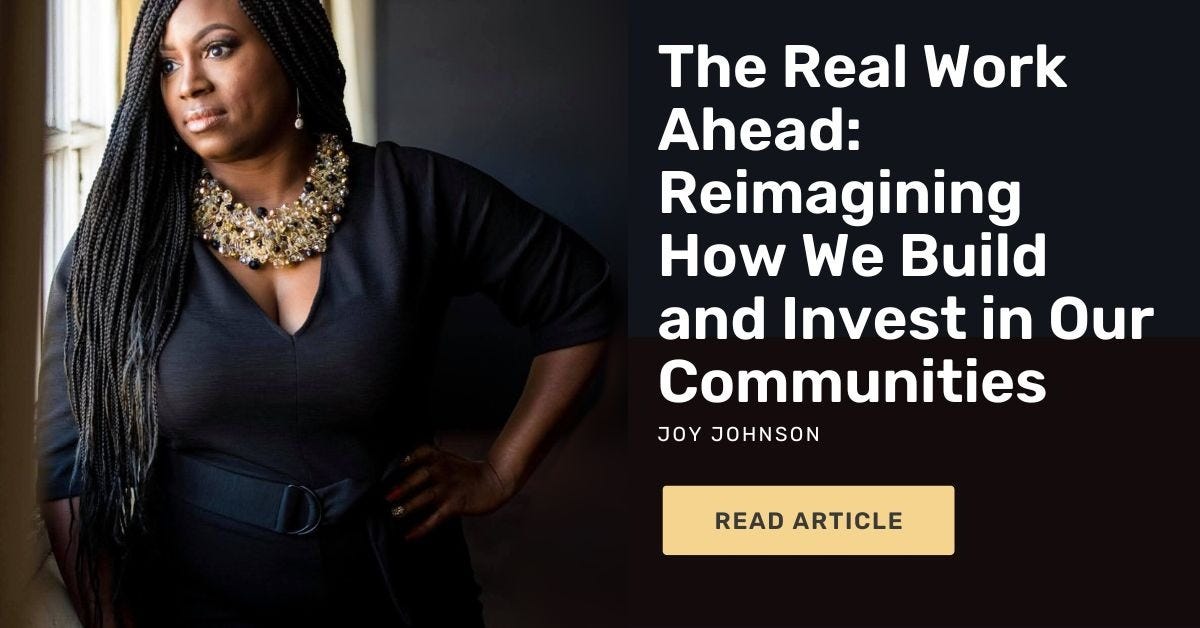
With more than two decades of experience in community development, real estate strategy, and organizational leadership, Joy Johnson brings a seasoned, solutions-focused voice to the field. She is committed to helping communities and institutions avoid systemic pitfalls and build models that truly work. To reach Joy call (216) 238-2235.