

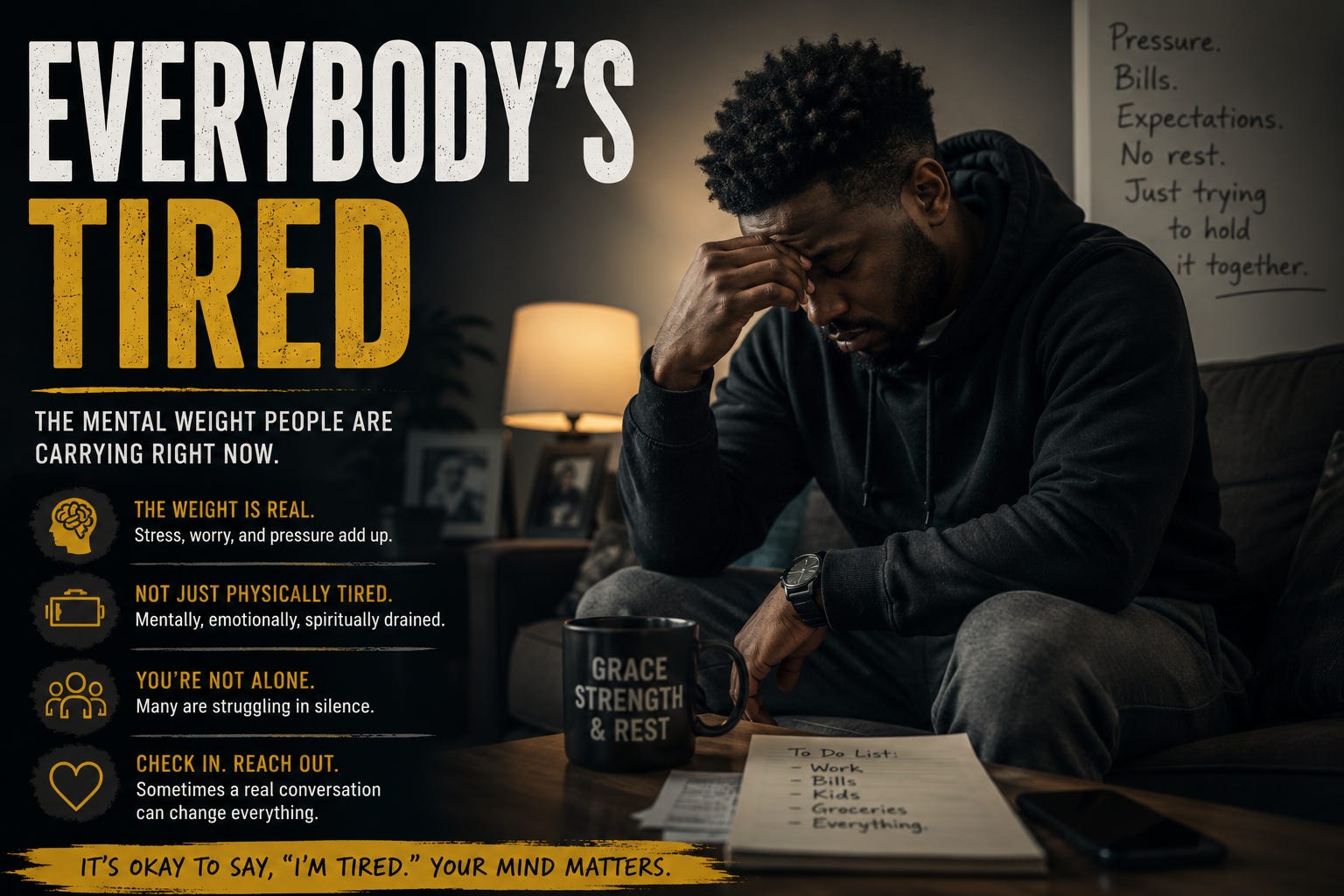
Lately, it feels like exhaustion has become part of everyday life.
Not just physical exhaustion, but the kind that sits in people mentally and emotionally. The kind of tiredness that follows you even after a full night of sleep. You can hear it in people’s voices, see it in their faces, and feel it in conversations that all seem to circle back to the same thing:
“Man… I’m just tired.”
And the truth is, a lot of people are.
People are tired of struggling financially while trying to pretend everything is fine. Tired of constantly worrying about bills, jobs, family responsibilities, and what tomorrow might bring. Tired of carrying pressure without ever really having time to process it.
For many people, life no longer feels balanced. It feels like survival.
At the same time, the world around us never seems to slow down. Phones are constantly buzzing. News cycles move at a relentless pace. Social media has created an environment where people are always comparing their lives, appearances, success, and happiness to everyone else. Even moments that are supposed to feel peaceful are interrupted by noise, notifications, and pressure.
And eventually, that constant stimulation starts taking a toll.
People become emotionally drained without even realizing it. Conversations become shorter. Patience becomes thinner. Rest starts feeling temporary instead of restorative. Many people are functioning every day while quietly running on empty.
What makes it harder is that exhaustion does not always look dramatic.
Sometimes it looks like somebody withdrawing from people they care about. Sometimes it looks like irritability, emotional numbness, or a loss of motivation. Sometimes it looks like a person constantly staying busy because slowing down would force them to confront how overwhelmed they really feel.
And in many communities, people have been conditioned to normalize this level of stress.
For generations, many families survived by pushing through difficult circumstances without stopping to focus on emotional well-being. Strength meant handling problems privately. Keep moving. Keep working. Keep showing up no matter how heavy life became.
There is value in resilience. But constantly surviving without slowing down to recover can wear people down over time.
That emotional weight eventually shows up somewhere. In relationships. In parenting. In workplaces. In friendships. In how people speak to each other. In how people see themselves.
And sometimes the hardest part is that many people do not feel like they have permission to admit they are overwhelmed.
They fear being seen as weak. Lazy. Ungrateful. Dramatic.
So instead, they carry it quietly.
That is why checking in with ourselves and with each other matters more than people realize. Not every person needs a perfect solution overnight. Sometimes people simply need space to be honest about what they are carrying without feeling judged for it.
A real Check Up From The Neck Up means recognizing that exhaustion is not something to casually ignore forever. It means understanding that mental and emotional well-being deserve attention just like physical health does.
Because the reality is, many people are trying to hold themselves together while feeling completely worn down underneath the surface.
And maybe one of the most important things we can do as communities is stop pretending that everybody is fine simply because they are still functioning.
Sometimes the strongest thing a person can say is:
“I’m tired.”