

Reflections from CEO 360’s Where’s the Money? workshop
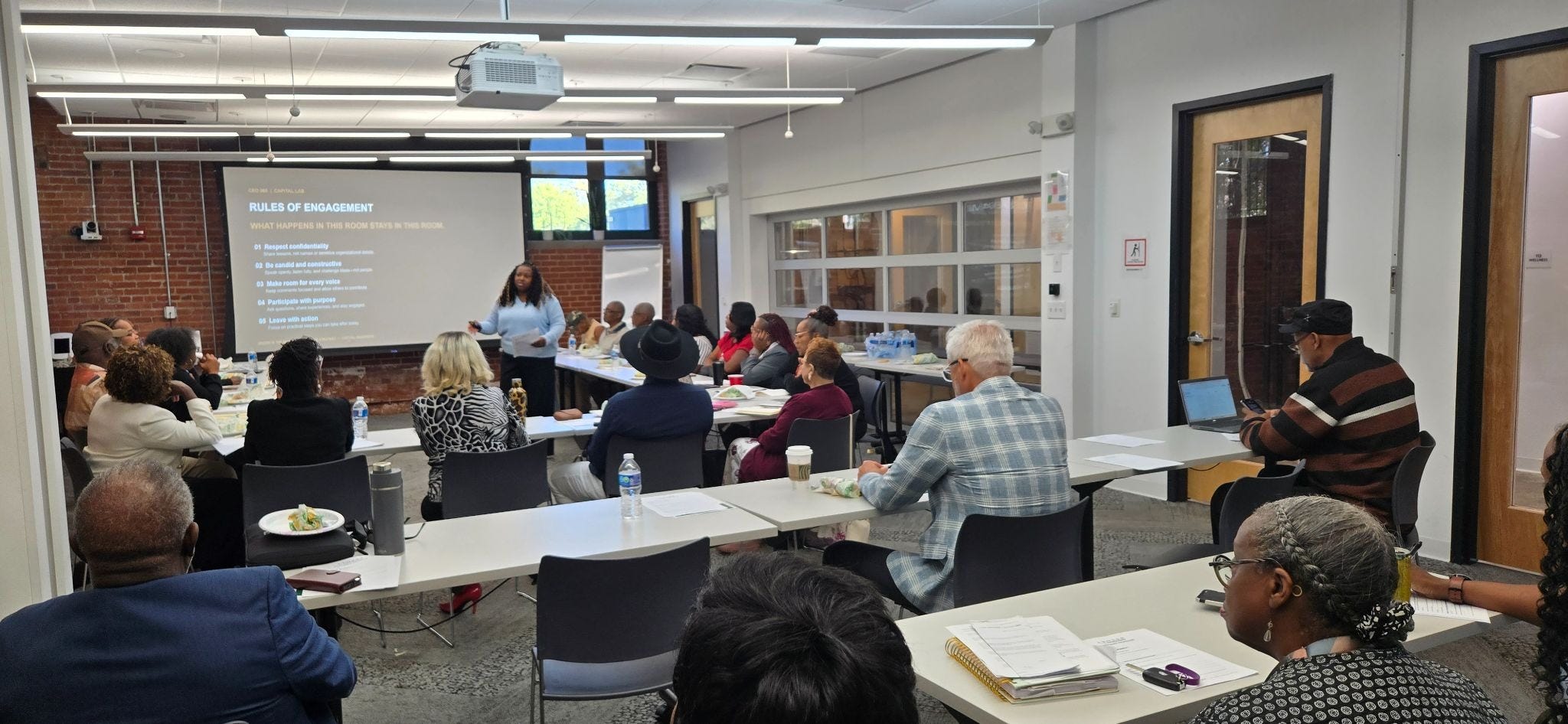
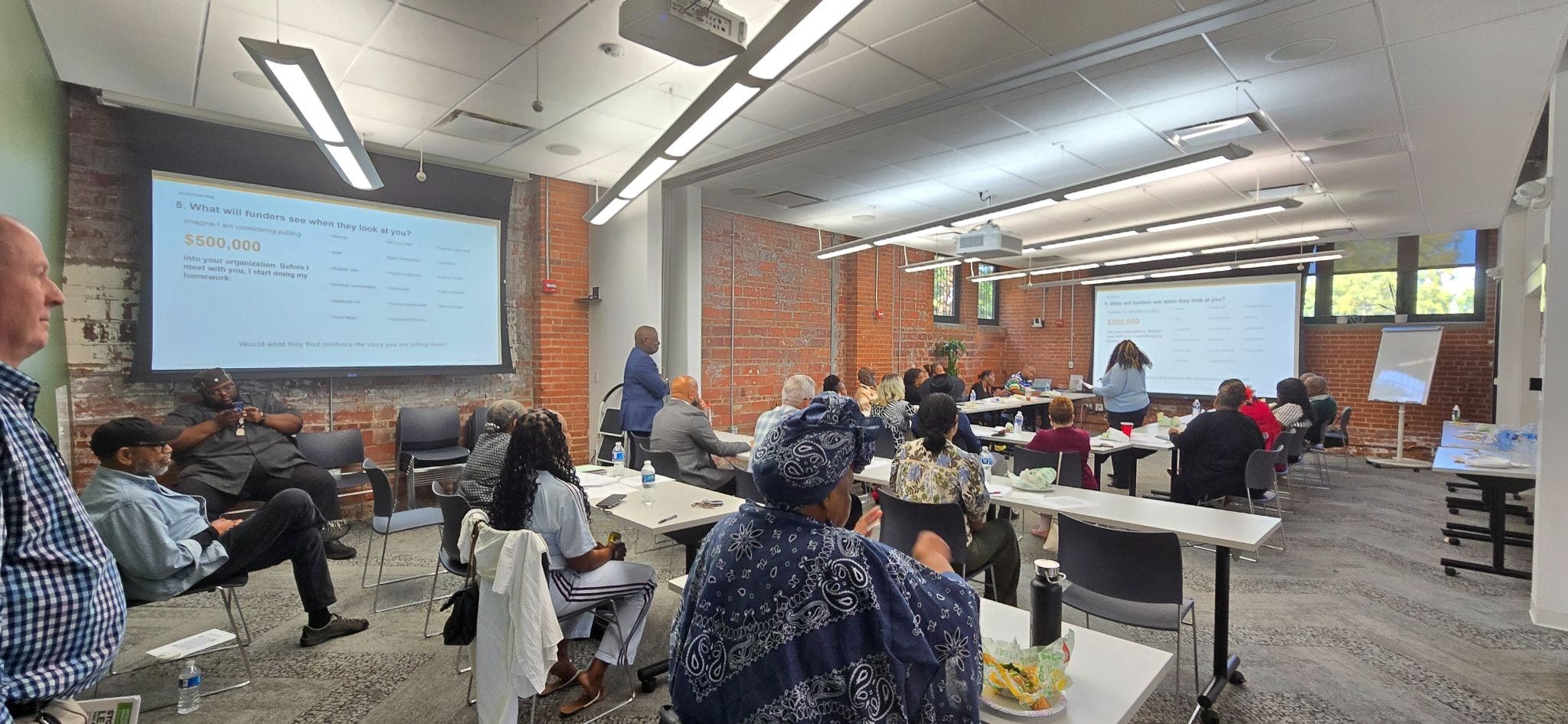
Nearly 40 people gathered at Midtown Tech Hive for a conversation about a question that nonprofit leaders know all too well: Where’s the money?
It’s a question I’ve heard throughout my career in nonprofit leadership. It’s a question I’ve asked myself. And it’s a question that has become even more urgent as organizations navigate shifting funding priorities, increased competition for resources, and growing community needs.
But as we explored during CEO 360’s recent workshop, Beyond the Grind: Where’s the Money?, perhaps we’ve been asking an incomplete question.
The conversation wasn’t just about finding money. It was about understanding how money moves, what makes an organization ready to receive it, and why relationships matter as much as a compelling mission.
Three themes stood out.
1. There’s More Money Than Grant Money
For many nonprofit organizations, fundraising has become synonymous with grant writing.
We search grant databases. We track application deadlines. We spend countless hours preparing proposals, gathering attachments, and hoping our organizations will be selected.
And while grants are an important part of nonprofit financing, they are only one piece of a much larger puzzle.
During the workshop, we challenged participants to broaden their understanding of where funding comes from.
Government contracts, corporate partnerships, earned revenue, individual giving, program-related investments, and other financing opportunities can all play a role in supporting an organization’s mission.
The question isn’t simply, “What grants are available?”
It’s “What resources exist to support the work we’re trying to accomplish, and how do we position ourselves to access them?”
That distinction matters.
When we focus exclusively on grants, we may overlook opportunities that are better aligned with our organizational goals, capabilities, and long-term sustainability.
The goal should not be to chase every available dollar. It should be to build a funding strategy that makes sense for the organization.
2. Knowing Where the Money Is Doesn’t Mean You’re Ready to Receive It
This was another message that resonated strongly with participants.
Finding a funding opportunity is one thing. Being prepared to pursue, secure, manage, and account for that funding is something entirely different.
An organization may have an extraordinary mission and a compelling story. But can it demonstrate results? Does it have reliable financial information? Is its board engaged? Does it have the operational capacity to deliver what it promises?
These are not simply administrative questions.
They are questions about organizational readiness.
Too often, nonprofit leaders begin preparing for funding opportunities only after they discover them.
By then, the clock is already ticking.
Financial statements need updating. Program outcomes need documenting. Partnerships need formalizing. Budgets need developing.
And suddenly, the organization is scrambling to demonstrate that it is prepared for an opportunity it has been hoping to receive.
Funding readiness cannot begin when the application opens.
It must become part of how we operate every day.
That means investing in the systems, governance, financial management, data, and organizational infrastructure that make us credible partners and responsible stewards of resources.
It also means being honest about where our organizations are today and what needs to improve before we pursue larger opportunities.
Because securing money that an organization isn’t prepared to manage can create as many problems as it solves.
3. Relationships Are Part of Your Funding Strategy
Perhaps one of the most important conversations centered on relationships.
I know firsthand how easy it is for a nonprofit executive to become consumed by daily operations.
There are staff issues to resolve, programs to oversee, budgets to manage, reports to review, and emergencies that demand immediate attention.
Before you know it, another week has passed, and you’ve spent nearly all your time working inside the organization rather than building the relationships that can move it forward.
But here’s something I learned during my years as an executive director:
Your calendar tells the truth about your priorities.
If building relationships is essential to your organization’s growth, where does that work appear on your calendar?
How much time are you spending meeting with potential partners, cultivating funders, engaging elected officials, connecting with business leaders, or simply making sure the right people understand the work your organization is doing?
Relationships aren’t an extracurricular activity for nonprofit executives.
They are a core leadership responsibility.
And they shouldn’t begin when you need something.
The strongest partnerships are often built long before a funding opportunity emerges. They grow through trust, shared interests, consistent communication, and a demonstrated ability to deliver results.
This is why I encouraged participants to ask themselves another important question:
Who needs to know you—and what are you doing to make sure they do?
Because sometimes the difference between an organization that consistently accesses resources and one that struggles isn’t the quality of its mission.
It’s the strength of its relationships, its visibility, and its readiness to act when opportunities emerge.
The Conversation Doesn’t End Here
What encouraged me most about the workshop wasn’t simply that nearly 40 people showed up.
It was that the conversation connected with challenges nonprofit leaders are navigating every day.
We weren’t discussing funding as an abstract concept. We were discussing the practical realities of leading organizations that are expected to do more, serve more people, and demonstrate greater impact, often with limited resources.
And we were challenging ourselves to think beyond the next grant application.
Because sustainable organizations aren’t built on funding opportunities alone.
They’re built on sound strategy, organizational readiness, strong relationships, and leaders who make time to position their organizations for what’s next.
At CEO 360, we believe nonprofit leaders should spend less time reacting to funding opportunities and more time preparing to pursue the right ones.
That’s why we’re continuing the conversation through individual follow-up sessions designed to help leaders take a closer look at their organization’s funding strategy, readiness, and opportunities for growth.
If you attended the workshop, thank you for being part of the conversation.
And if you couldn’t join us, I hope you’ll consider these three questions:
Are we looking beyond grants to identify the full range of resources available to support our mission?
If a significant funding opportunity emerged tomorrow, would our organization be ready?
Are we intentionally building the relationships that could open doors for our organization?
Because the question is no longer just Where’s the money?
The bigger question is: When you find it, will your organization be positioned to receive it?
With more than two decades of experience in community development, real estate strategy, and organizational leadership, Joy Johnson brings a seasoned, solutions-focused voice to the field. She is committed to helping communities and institutions avoid systemic pitfalls and build models that truly work. To reach Joy, call (216) 238-2415