

DigitalC was questioned when Cleveland bet on its ambitious broadband model. Less than three years later, the Cleveland-based nonprofit is collecting national awards, exporting its model to Detroit and putting the city in the middle of a national conversation about affordable internet.
CLEVELAND — There is something particularly satisfying about watching a Cleveland organization win on a national stage.
It becomes even more meaningful when that organization was told, in one form or another, that what it was attempting might not work.
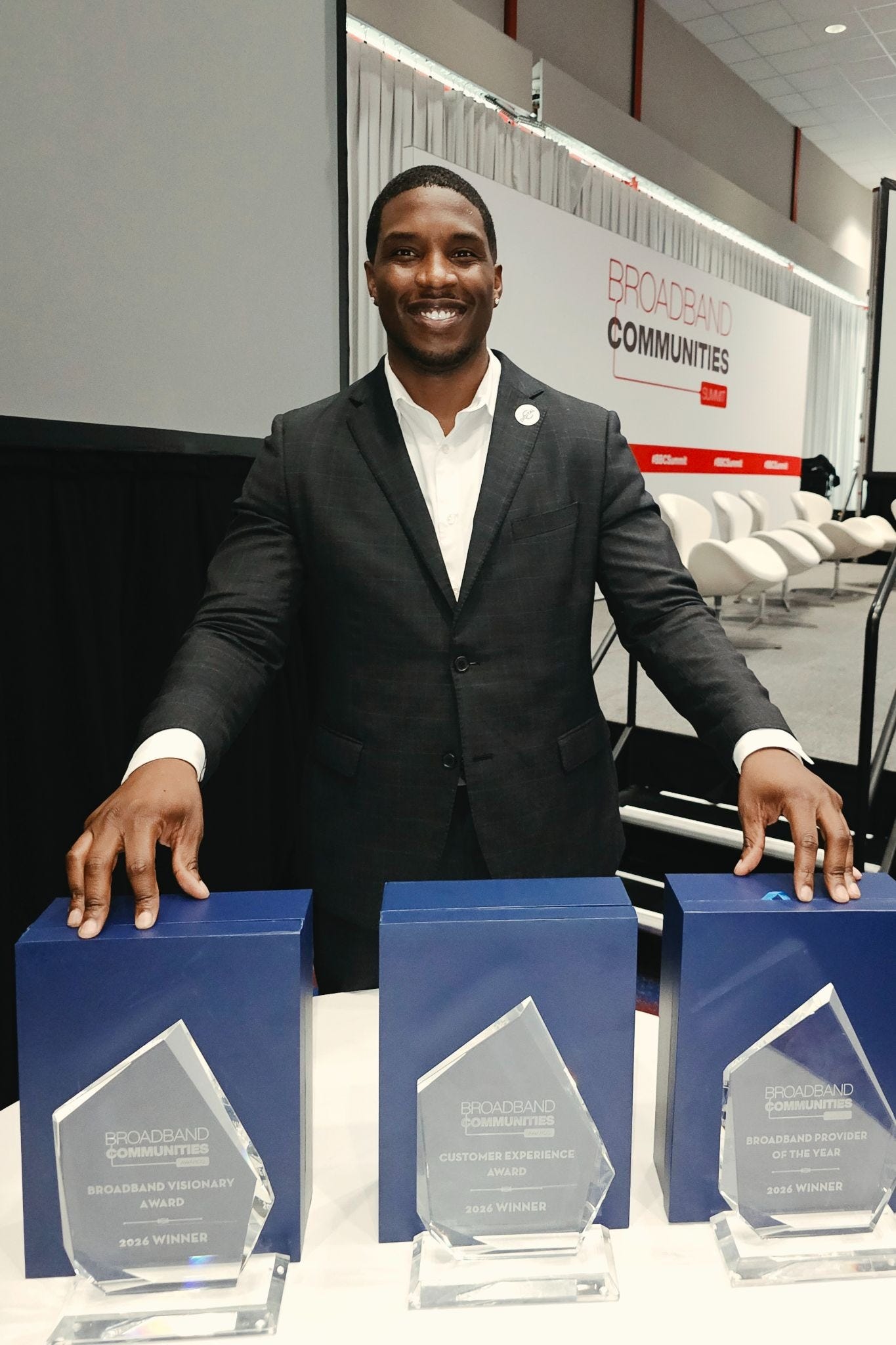
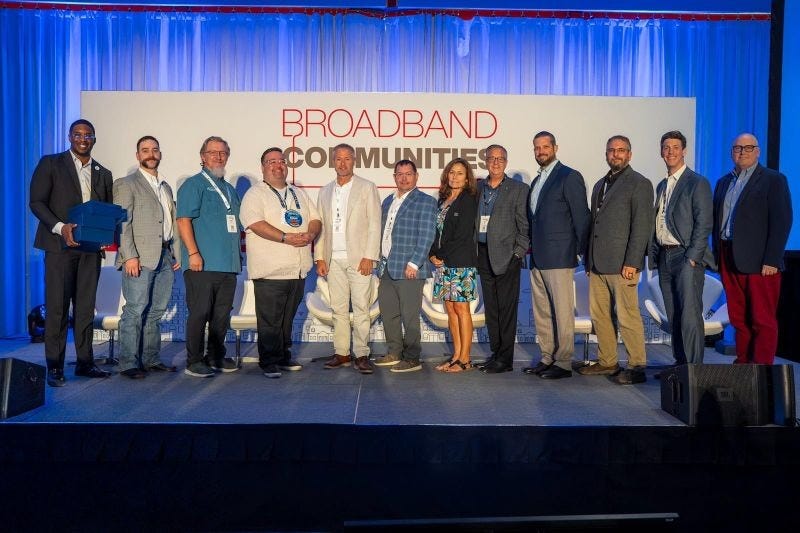
This August in Houston, DigitalC walked into the 2026 Broadband Communities Summit nominated for three awards and walked away recognized with three of the broadband industry’s national honors.
DigitalC was named Broadband Provider of the Year.
It won the Customer Experience Award.
And DigitalC Chief Executive Officer Joshua Edmonds received the Broadband Visionary Award, recognizing leadership that is helping change the direction of the broadband industry. (GlobeNewswire)
That is an impressive night for any internet service provider.
It is especially impressive for a nonprofit headquartered at Cleveland’s MidTown Tech Hive on Euclid Avenue that, just a few years ago, was standing before Cleveland City Council trying to convince elected officials that it could actually do what it was promising.
Today, the conversation is very different.
The organization Cleveland was debating is now being recognized nationally.
And the model being developed in Cleveland is beginning to travel.
Three awards, one Cleveland organization
The Broadband Communities Awards have been part of the industry’s national summit since 2004. This year’s competition drew a record number of entries, according to DigitalC, with winners selected through an external judging process. Broadband Communities reported that nearly three dozen industry judges participated in selecting the 2026 honorees.
DigitalC didn’t win an obscure side category.
It won Broadband Provider of the Year, placing the Cleveland nonprofit in competition with internet providers from across the country.
The Customer Experience Award recognized something equally important: what happens after the technology is installed.
DigitalC’s model combines high-speed home internet with straightforward pricing, local customer support, installation assistance and digital-skills resources. That matters because closing the digital divide was never simply about putting equipment on poles or antennas on buildings. The question has always been whether people can afford the connection, whether they can depend on it and whether they know how to use it to improve their lives.
Then came the individual recognition.
Edmonds received the Broadband Visionary Award for his leadership in building a community-based broadband model that brings technology, affordability, customer service and neighborhood partnerships together.
For Cleveland, that recognition deserves some attention.
Edmonds represents a generation of younger executives being asked to lead institutions through problems that older systems have struggled to solve. Broadband access is one of them.
He inherited an organization with history, expectations and skeptics. He then accepted an assignment that was extraordinarily ambitious: help build an affordable broadband network capable of reaching virtually an entire major American city.
The results are becoming difficult to ignore.
Look at the numbers
DigitalC launched its current citywide Cleveland initiative in January 2024.
Since then, according to the organization, it has completed a next-generation citywide broadband network in less than 18 months.
More than 12,500 households have been connected to high-speed home internet, representing more than 31,000 residents.
More than 30,000 residents have received digital-skills training.
And what began as a Cleveland strategy has now expanded into Detroit.
Those numbers make the awards easier to understand.
This isn’t recognition based simply on a promising idea.
Something was actually built.
People were actually connected.
Residents were actually trained.
And another major American city is now investing in adapting the model.
Rocket Community Fund announced a $3.5 million investment in the Detroit Last Mile Initiative, working with DigitalC and the Detroit Housing Commission. The initiative is expected in its initial phase to support broadband access for as many as 2,400 households and 6,000 Detroit residents. It builds upon an earlier DigitalC pilot serving families in Detroit public housing. (Rocket Community Fund)
Think about what that means for Cleveland.
Cities like Cleveland are frequently encouraged to look elsewhere for models.
We study Atlanta.
We study Charlotte.
We study Washington.
We study Detroit.
We attend conferences and come home asking what Cleveland should copy.
In this case, somebody else is looking at something developed here.
Detroit is adapting a Cleveland model.
That should matter to us.
This road was not easy
It would be revisionist history to pretend everybody applauded when this started.
They didn’t.
When Mayor Justin Bibb’s administration proposed investing $20 million in American Rescue Plan Act funding into DigitalC’s citywide broadband effort in 2023, members of Cleveland City Council raised serious questions about whether the organization could scale quickly enough to deliver what it promised.
The original vision was enormous: expand affordable service throughout Cleveland and ultimately make the network available to more than 170,000 households. The proposed residential service was $18 per month. (Home | City of Cleveland Ohio)
Council temporarily paused the proposal.
DigitalC’s previous performance was questioned.
Edmonds was questioned.
The organization’s ability to grow from a relatively small provider into something capable of serving an entire city was questioned. (Signal Cleveland)
And the skepticism did not immediately disappear.
DigitalC missed its 2024 household subscription benchmark, connecting roughly 2,800 households instead of the contract goal of 3,500. Cleveland City Council consequently withheld nearly $1 million in performance funding. (Signal Cleveland)
That could have become the defining moment.
Instead, DigitalC adjusted.
And then it delivered.
For 2025, the contract required DigitalC to add 4,700 eligible household subscriptions and provide digital-adoption services to 10,000 residents.
Cleveland’s Bureau of Internal Audit verified 4,862 eligible new household subscriptions and 10,105 eligible digital-adoption records.
Both targets were exceeded.
Cleveland City Council subsequently authorized DigitalC’s full $4.35 million performance payment. (DigitalC)
That distinction matters.
The story is not that DigitalC never faced adversity.
The story is that it encountered adversity, was held accountable, adjusted and produced measurable results.
There is leadership in that, too.
Cleveland should recognize what is happening here
Sometimes a city’s proximity to its own institutions makes achievement harder to appreciate.
We see the people involved.
We know the politics.
We remember every argument.
We remember every Council hearing and every disagreement.
Then somebody hundreds of miles away looks at the exact same work and sees innovation.
That appears to be happening with DigitalC.
Broadband Communities did not give DigitalC one award in 2026.
It gave the Cleveland organization recognition for the provider itself, for the experience it gives customers, and for the vision of the CEO leading it.
And these awards did not arrive in isolation.
DigitalC previously received the Broadband Communities Community Improvement Award in 2024. In 2025, it received a Fierce Network Innovation Award for Digital Divide Impact alongside Tarana Wireless. Its low-cost internet offering has also received recognition from the National Digital Inclusion Alliance.
There is now a pattern.
Cleveland built something.
The industry noticed.
And the recognition may be moving beyond the United States. DigitalC has now been shortlisted for two 2026 World Communication Awards — the Connected Communities Award for its Canopy network and the Social Contribution Award — placing the Cleveland organization alongside telecommunications companies from around the world. Winners will be announced in London in November. (Terrapinn)
More than broadband
The importance of DigitalC’s work goes beyond internet speed.
A reliable home internet connection touches education, employment, entrepreneurship, healthcare, banking, government services and almost every other doorway into the modern economy.
For decades, conversations about Cleveland’s digital divide documented who was disconnected.
DigitalC is trying to build the infrastructure that changes that conversation.
The organization’s model also challenges the idea that residents must choose between affordability and quality.
That may ultimately be one of its most significant contributions.
As Edmonds said following the awards, DigitalC set out to solve affordability without sacrificing quality.
The broader industry is now watching to see whether that can be done at scale.
Cleveland is becoming part of that experiment — and increasingly, part of the answer.
Give Cleveland its flowers
There will be additional benchmarks.
There should be continued oversight.
There will undoubtedly be more questions.
That is what happens when public dollars, ambitious goals and major infrastructure projects intersect.
But accountability should work both ways.
When organizations miss, we should say they missed.
When they correct course, we should acknowledge the correction.
And when a Cleveland-based organization wins three national awards in one year, surpasses performance targets, builds a citywide network in less than 18 months, connects tens of thousands of people, trains tens of thousands more and begins exporting its model to another major American city, Cleveland should be able to say something very simple:
This is impressive.
DigitalC deserves recognition.
So does the team that built it.
And Joshua Edmonds deserves recognition as a next-generation CEO who accepted an extraordinarily difficult assignment, endured the scrutiny that came with it and now finds himself receiving one of his industry’s national awards for visionary leadership.
For years, Cleveland was used as an example of America’s digital divide. Now it is home to what the industry refers to as America’s fastest growing community-based network, taking Cleveland from worst to first in connectivity.
Now a Cleveland organization is being studied for how to close it.
That is a very different story.
And it is one worth celebrating.