

There’s a moment many organizations experience—often quietly.
A project comes together.
The funding is secured.
The work gets done.
And then… it starts again.
New project.
New conversations.
New uncertainty.
On the surface, it looks like progress.
But underneath, it can feel like starting over—every single time.
The Pattern Most People Normalize
In community development, it’s common to move from one opportunity to the next:
A project is identified
Capital is assembled
The deal gets done
Then the cycle resets
And for a while, that works.
Until the environment shifts.
Until funding tightens.
Until timelines stretch.
Until “good projects” aren’t enough on their own.
That’s when a different question starts to emerge:
Are we building projects… or are we building something that can consistently produce them?
The Shift That Changes Everything
There are two ways to grow in this space:
1. Project-by-Project
“We have a strong deal. Let’s go get it funded.”
2. Platform-Based
“We’ve built a structure that consistently attracts, supports, and delivers strong deals.”
Both can lead to success.
But only one creates stability.
What a Platform Actually Means
A platform isn’t about size.
It’s about repeatability.
It means your organization isn’t starting from zero each time—it’s building on something that already exists.
It looks like:
A clear pipeline
Not just one project—but several at different stagesAligned capital strategy
Knowing which tools you use—and why—before the deal appearsConsistent relationships
Funders, partners, and stakeholders who already understand your workDefined process
A way of moving projects forward that doesn’t change every time
Here’s the Aha
When organizations operate as platforms, something subtle but powerful happens:
They stop having to “convince” capital.
Instead, capital begins to follow their pattern.
Because what funders are often looking for isn’t just a good project.
It’s a predictable system that produces good outcomes.
And predictability builds confidence.
Why This Matters Right Now
We’re in a moment where:
Capital is more selective
Risk tolerance is lower
And consistency matters more than ever
That means organizations that rely solely on individual wins may feel the pressure more quickly.
Not because their work isn’t strong.
But because the environment is asking a different question:
“Can this be done again—and again—without starting over?”
A Different Way to Think About It
Before your next deal, consider:
Do we have more than one opportunity in motion?
Are we clear on how we structure deals—or does it change each time?
Do our partners understand how we work—or just this one project?
If this project closes… what comes next?
If those answers feel uncertain…
That’s not a problem.
It’s a signal.
Because This Is the Real Opportunity
The goal isn’t to stop doing projects.
It’s to build something underneath them.
Something that:
Holds the knowledge
Strengthens the relationships
And carries momentum from one deal to the next
So that over time, you’re not just completing work…
You’re building a system that makes the next opportunity easier to access.
The Invitation
If you’ve ever felt like:
“We did everything right… but now we’re back at the beginning”
“Every deal takes just as much effort as the last”
It may not be about doing more.
It may be about building differently.
And sometimes, that shift comes from stepping back long enough to see the difference between activity and structure—between completing projects and creating something that can sustain them.
Because when you move from projects to platforms…
You don’t just finish deals.
You build something that makes the next one possible—before it even begins.
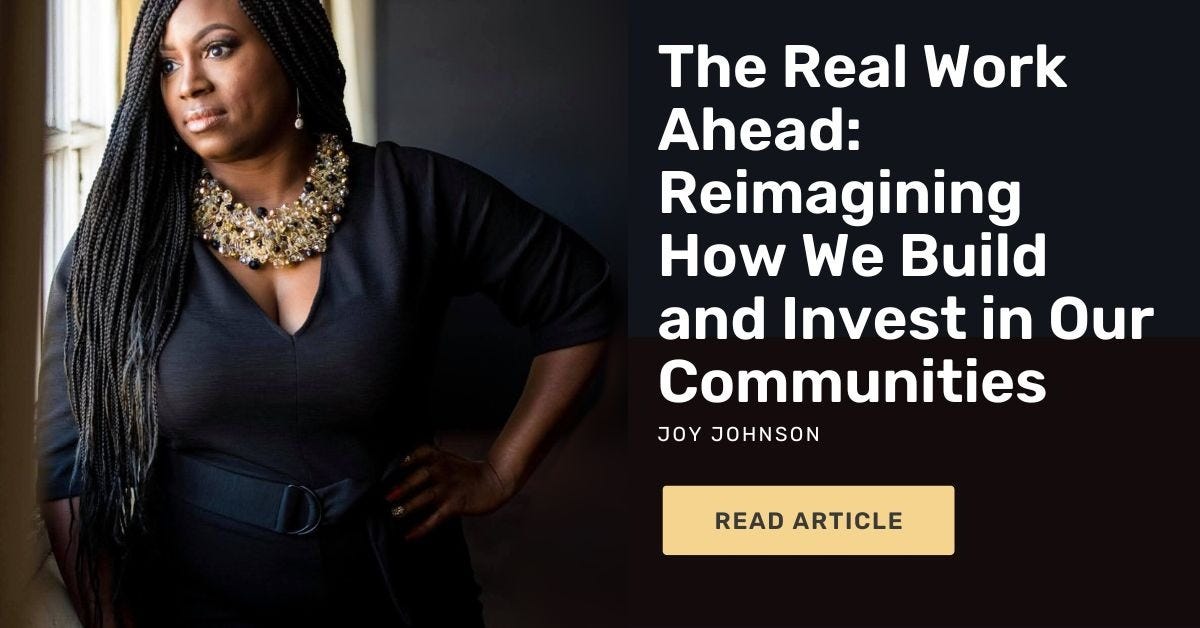
With more than two decades of experience in community development, real estate strategy, and organizational leadership, Joy Johnson brings a seasoned, solutions-focused voice to the field. She is committed to helping communities and institutions avoid systemic pitfalls and build models that truly work. To reach Joy call at (216) 238-2235.
You have said a lot! Developing platforms is another way of approaching things. I don't fully get it yet, but I am listening! (I happen to like planning & executing projects; but I am open to new thoughts & approaches:)