

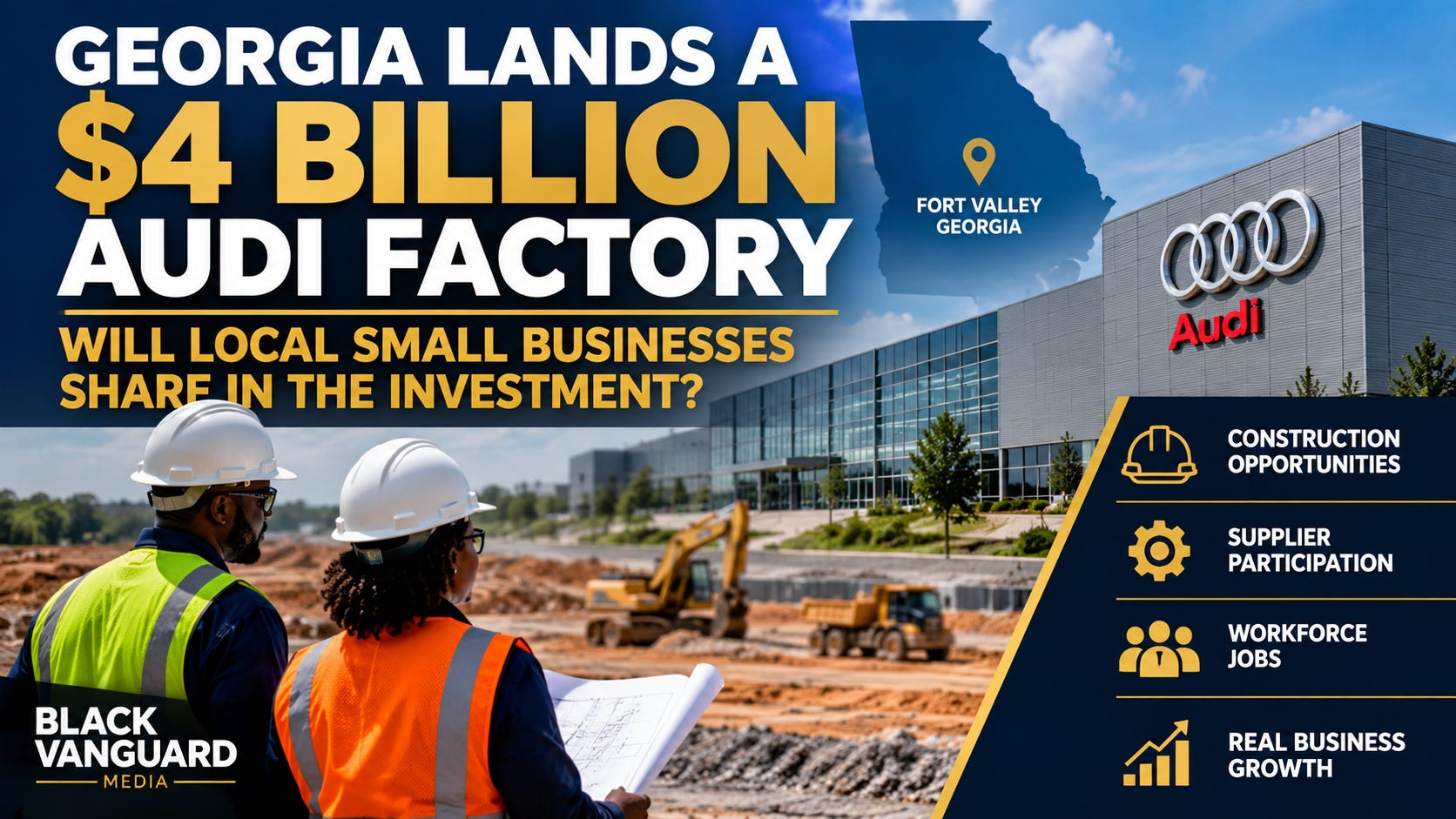
FORT VALLEY, Ga. — German automaker Audi plans to invest approximately $4 billion in its first U.S. manufacturing facility, bringing thousands of jobs and the prospect of a new automotive supply chain to Middle Georgia.
The factory, announced October 24, will be built at the Middle Georgia Megasite in Peach County. Audi expects to begin site grading in 2027, construction in 2028 and full production in 2031. The facility is designed to manufacture as many as 200,000 vehicles annually and employ approximately 4,500 people.
For Georgia, the announcement represents a major industrial investment. For local businesses, the more consequential question is how much of that investment they will actually capture.
A Multibillion-Dollar Opportunity, But for Whom?
Building an automotive factory requires extensive construction, infrastructure and equipment installation. Contractors specializing in electrical systems, concrete, mechanical work, transportation and industrial services could potentially benefit.
However, Audi has not publicly detailed how much of its announced investment will be spent on construction contracts, which companies will manage those contracts or what portion will be available to local subcontractors.
The $4 billion figure represents the planned overall investment, not a pool of money automatically available to small businesses.
That distinction matters.
Major industrial projects frequently rely on established national and international contractors. Smaller regional firms may participate, but access often depends on bonding capacity, insurance, safety qualifications, specialized experience and sufficient working capital.
Businesses that wait until construction begins to prepare could find themselves competing for opportunities already committed to other suppliers.
Getting Into Audi’s Supply Chain
The opportunities could extend well beyond construction.
Once operational, the factory will require parts, equipment maintenance, logistics, packaging, technology and other services.
Audi has identified Georgia’s existing automotive supplier network as one reason for selecting the location. But established suppliers may have advantages over smaller companies seeking their first major manufacturing contract.
For Black-owned businesses, meaningful participation should be measured through verified procurement data rather than assumptions about inclusion or exclusion.
How many local and Black-owned firms will qualify to bid? What contracts will they receive? How much purchasing will remain in Peach, Houston and Macon-Bibb counties?
Those answers are not established by the investment announcement.
Preparing Workers and Businesses
Georgia Quick Start will work with Audi on customized workforce training, including partnerships with the Technical College System of Georgia.
That creates a pathway for residents seeking manufacturing careers. The announced jobs, however, remain future positions rather than employment already created.
Small businesses face a different readiness challenge.
Manufacturers and contractors seeking opportunities will need sound accounting systems, financing, workforce capacity and documented qualifications. Local lenders and economic-development organizations could help companies prepare before major purchasing decisions are made.
The region’s ability to develop qualified suppliers may determine whether Audi’s presence produces a lasting network of locally owned businesses.
Measuring What Remains After the Announcement
Audi’s investment could reshape Middle Georgia’s economy. But the project’s ultimate value cannot be measured solely by the size of the factory or the number of jobs announced.
A fuller assessment would examine local contract awards, supplier participation, wages, workforce advancement and the growth of businesses headquartered in surrounding communities.
Those measures would reveal whether the investment creates lasting local wealth or primarily benefits companies already positioned to serve major manufacturers.
For Georgia, attracting Audi is a significant achievement.
The next test is whether the region can turn that investment into opportunities local businesses are prepared to win.