

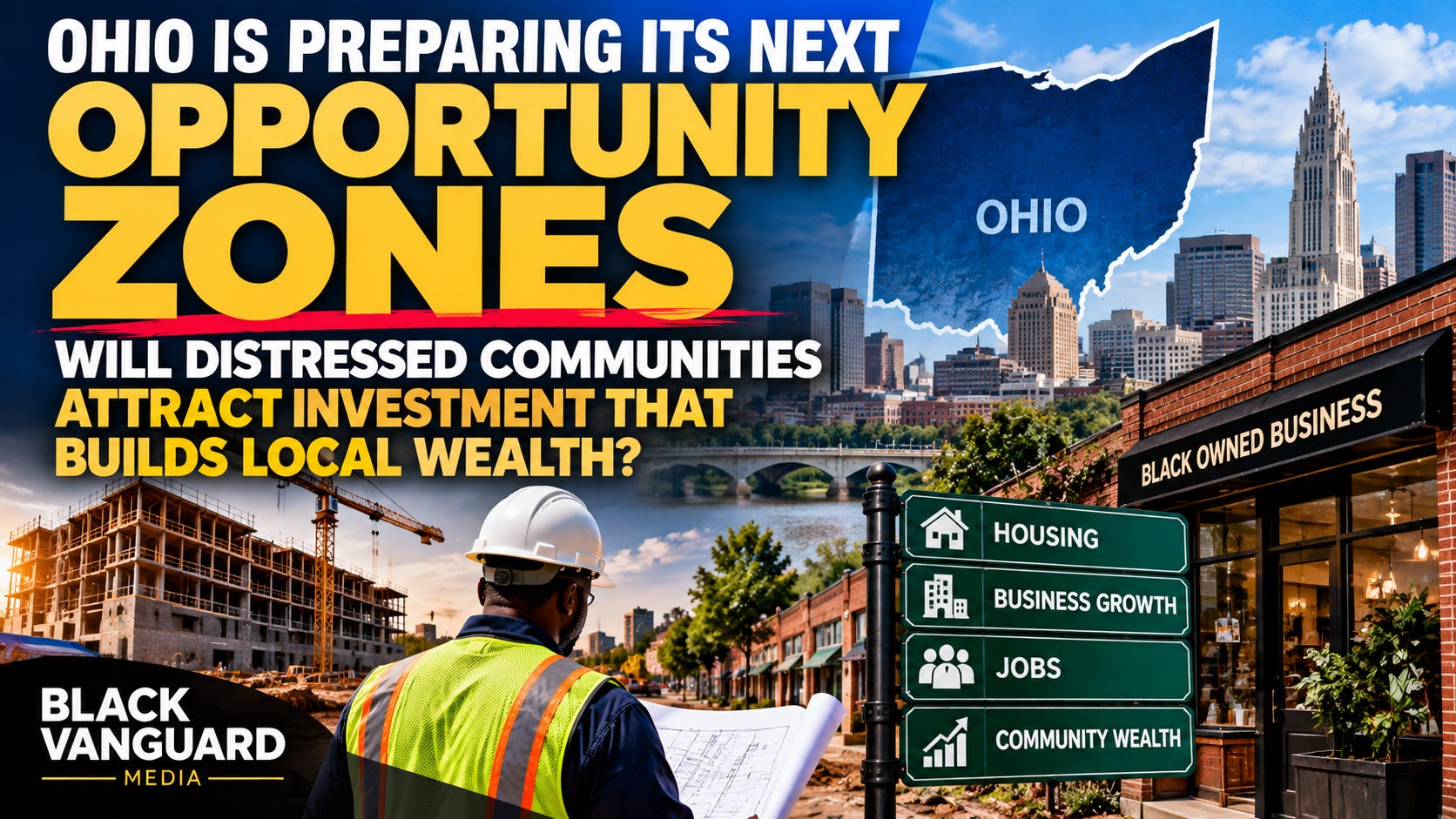
COLUMBUS, Ohio — Ohio is approaching an October 28 deadline for communities seeking consideration under the next round of federal Opportunity Zone designations, a process that could influence where investment flows into housing, commercial property and businesses for years to come.
The federal Opportunity Zone program offers tax advantages to investors who direct qualifying capital into designated lower-income communities. Created under the 2017 Tax Cuts and Jobs Act, the program was designed to encourage private investment in neighborhoods that have historically struggled to attract financing.
New federal legislation enacted in 2025 made Opportunity Zones a continuing part of the tax code, with a new designation process beginning in 2026.
For Ohio communities, the immediate challenge is identifying eligible census tracts and positioning them for consideration. The larger challenge is ensuring that future investment produces measurable benefits for people and businesses already located there.
Investment Does Not Automatically Create Local Wealth
Opportunity Zones can make development projects more attractive by reducing certain federal capital-gains taxes for qualifying investors.
That incentive may help finance apartment buildings, commercial rehabilitation, industrial facilities and new businesses that otherwise struggle to secure capital.
But the location of an investment does not necessarily determine who benefits.
A new commercial development might increase property values while creating relatively few opportunities for neighborhood entrepreneurs. Housing construction could expand supply while remaining unaffordable to existing residents. Outside investors might capture most of the financial returns even when a project succeeds.
These outcomes are not inevitable, but they demonstrate why investment totals alone provide an incomplete measure of economic progress.
What Earlier Opportunity Zones Revealed
Research on the original program found that Opportunity Zone investment was unevenly distributed.
Studies by economists and federal researchers have identified substantial investment activity in some designated communities, particularly through real estate projects. Evidence of broader improvements in employment, household income and neighborhood well-being has been more mixed.
The program’s design also matters. Investors generally receive tax benefits based on qualifying investments, rather than meeting specific targets for local hiring, affordable housing or minority-owned business participation.
Consequently, communities seeking long-term benefits may need to establish additional expectations through development agreements, local financing arrangements and public reporting.
The Opportunity for Ohio Businesses
For small and Black-owned businesses, the next round of designations could create opportunities in construction, property rehabilitation, professional services, neighborhood retail and commercial development.
However, receiving an Opportunity Zone designation does not automatically provide a grant or direct financing to an existing business.
Entrepreneurs still need access to investors, viable projects, financial records and the capacity to negotiate competitive terms.
Local governments and development organizations could help by connecting investors with existing businesses, identifying redevelopment opportunities and preparing smaller companies to participate.
The distinction between attracting capital and building local ownership is critical.
A community that gains new buildings but loses established businesses may experience redevelopment without a corresponding increase in locally retained wealth.
Measuring Success Beyond Investment Announcements
As Ohio considers future designations, several questions deserve attention.
How many locally owned businesses will receive investment? How many residents will obtain permanent jobs? Will affordable commercial space remain available? Will existing homeowners and tenants benefit from neighborhood improvements?
Equally important is whether communities establish baseline measurements before new investments arrive.
Without those figures, officials may be able to report millions of dollars invested but struggle to demonstrate how residents’ economic circumstances changed.
Ohio’s next Opportunity Zones could become powerful tools for redevelopment.
Whether they become tools for lasting community wealth will depend on more than which neighborhoods receive the designation. It will depend on who owns the businesses, who receives the contracts and how much of the economic benefit remains after the investors have collected their returns.