

There are moments when a community institution does not collapse all at once.
It does not fall because of one headline.
It does not fail because of one contract.
It does not unravel because of one leader, one consultant, one board meeting, or one disputed decision.
It breaks down slowly — through missed warnings, poor governance, internal confusion, boardroom politics, unmanaged financial pressure, and the refusal to take responsibility when the truth becomes inconvenient.
That is the story now surrounding Burten, Bell, Carr Development, Inc. — better known across Cleveland as BBC.
For decades, BBC carried the reputation of a neighborhood institution. It stood in communities where development is not theoretical, where disinvestment is not academic, and where residents depend on local organizations to fight for resources, housing, economic opportunity, small businesses, and community voice.
That is exactly why this story matters.
When a community development corporation operates with public trust, public resources, foundation support, city relationships, council relationships, and neighborhood expectations, governance is not a private matter. Board decisions do not live quietly inside a conference room. They affect staff, residents, contractors, partners, funders, public officials, and the credibility of the entire neighborhood development ecosystem.
And when governance breaks down, the community deserves to know.
This series begins with a simple question:
What happened inside BBC’s boardroom?
Because the record suggests that the public narrative being pushed now is not the full story.
BBC’s current posture attempts to frame Joy Johnson, Darvio Morrow, First Class Broadcasting, Urban Voice Public Media, and Jerry Primm as the problem. But the paper trail tells a much more troubling story — one that points back to BBC’s own governance structure, leadership transition, financial oversight, and post-Joy decision-making.
This is not just a contract dispute.
This is a governance story.
And governance is where accountability begins.
The Public Version vs. the Paper Trail
BBC now wants the public, the court, and perhaps its funders to believe that its current problems can be traced to others: Joy Johnson, Darvio Morrow, FCB, Urban Voice Public Media, or Jerry Primm.
But the record raises a different possibility: that BBC’s leadership is attempting to shift blame after a chain of internal failures became impossible to ignore.
Start with what is not in dispute.
BBC entered into a Radio Syndication, Affiliation, and Consulting Agreement with First Class Broadcasting Corporation. BBC admits the original Agreement existed. BBC admits the Agreement was executed by then-Executive Director Joy Johnson. BBC admits WOVU-LP was BBC’s station. BBC admits FCB was brought in to provide content, programming, consulting, underwriting support, and digital strategy.
That matters.
Because before BBC turned around and accused others of wrongdoing, BBC had already entered into the relationship. BBC had already allowed the engagement. BBC had already accepted the basic structure of FCB’s role.
So the question is not whether FCB appeared out of nowhere.
It did not.
The real question is why BBC is now trying so hard to make the public forget that there was an agreement in the first place.
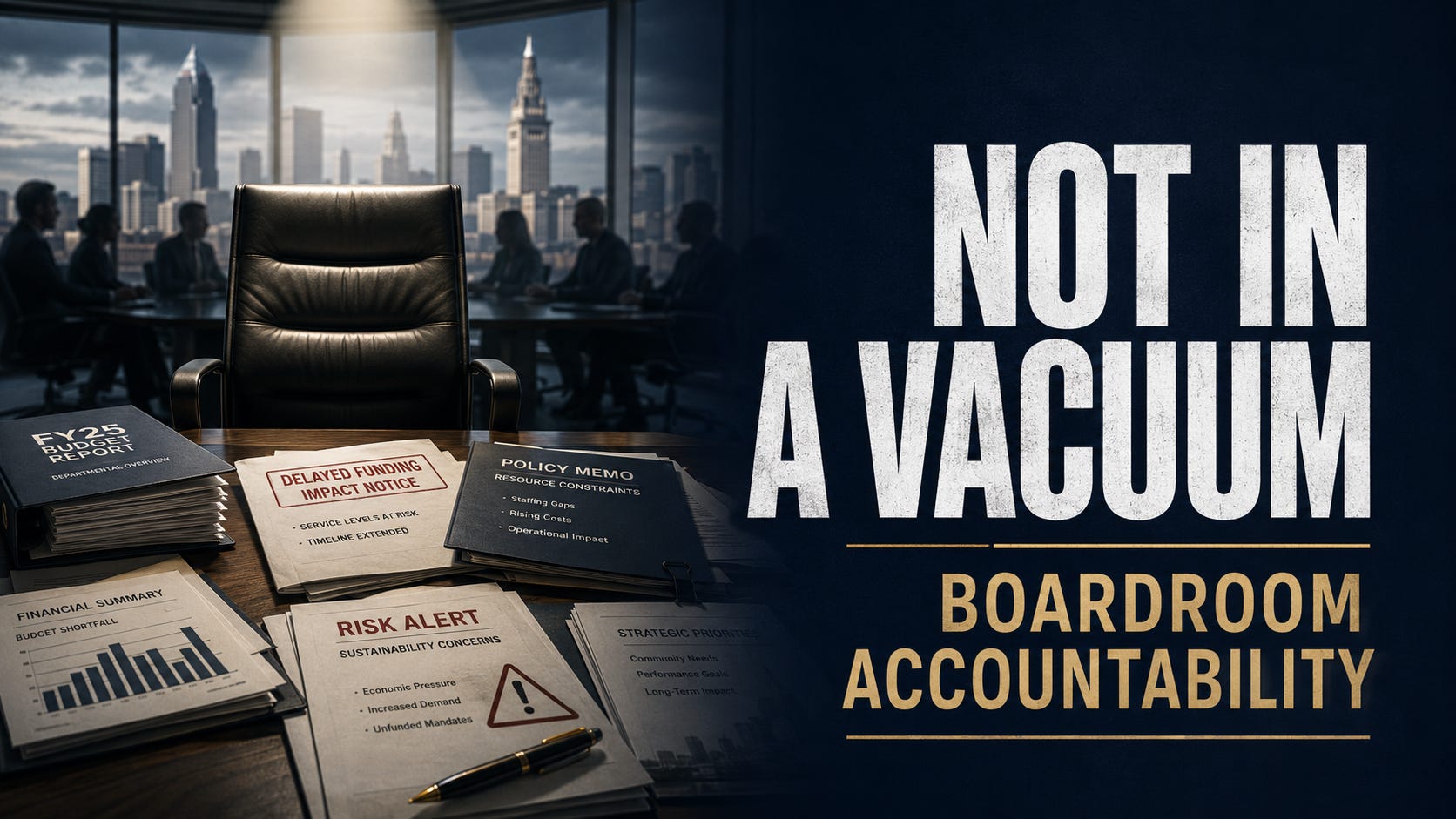
Joy Johnson Was Not Operating in a Vacuum
One of the most irresponsible things an institution can do is blame a former executive for problems the board itself knew — or should have known — were structural.
Joy Johnson did not lead BBC during normal times. She led during a period of severe strain across Cleveland’s CDC landscape. Public reporting, city discussions, foundation concern, delayed funding, staffing shortages, and neighborhood development pressure all pointed to the same reality: Cleveland’s CDC system was under stress.
Joy did not hide that.
She raised it.
She documented it.
She pushed for policy solutions.
She tried to protect BBC’s operations while navigating a funding system that was becoming increasingly unstable.
Internal materials show that Joy was documenting city funding delays, cash-flow strain, contract uncertainty, reimbursement problems, and the need for stronger systems. She was not pretending everything was fine. She was telling the organization and stakeholders that the system was changing and that BBC needed to adapt.
That is leadership.
The real failure would have been ignoring the problem.
And yet, after Joy was removed, the emerging narrative appears to be designed to make her the problem instead of asking whether the board adequately understood the financial conditions, operational risks, and institutional warnings that were already in front of it.
That distinction matters.
After Joy was removed, BBC did not stabilize. The governance questions continued under post-Joy leadership. David Roney became Interim Executive Director.
Jamie Parker, who was Board Chair and an attorney, later became Interim Executive Director. That matters because the crisis moved into legal-response failure, missed deadlines, counterclaim posture, and damage control.
Jamie Parker’s role matters because she was not simply a bystander. She was Board Chair during key post-Joy decisions, later became Interim Executive Director, and is also an attorney.
In a crisis involving missed legal deadlines, unopened mail, and a counterclaim designed to redirect blame, her role sharpens the governance questions BBC cannot avoid.
Because a board cannot receive warnings, benefit from an executive’s relationships, rely on her institutional knowledge, approve major strategic direction, and then later pretend that everything went wrong because of her alone.
That is not accountability.
That is scapegoating.
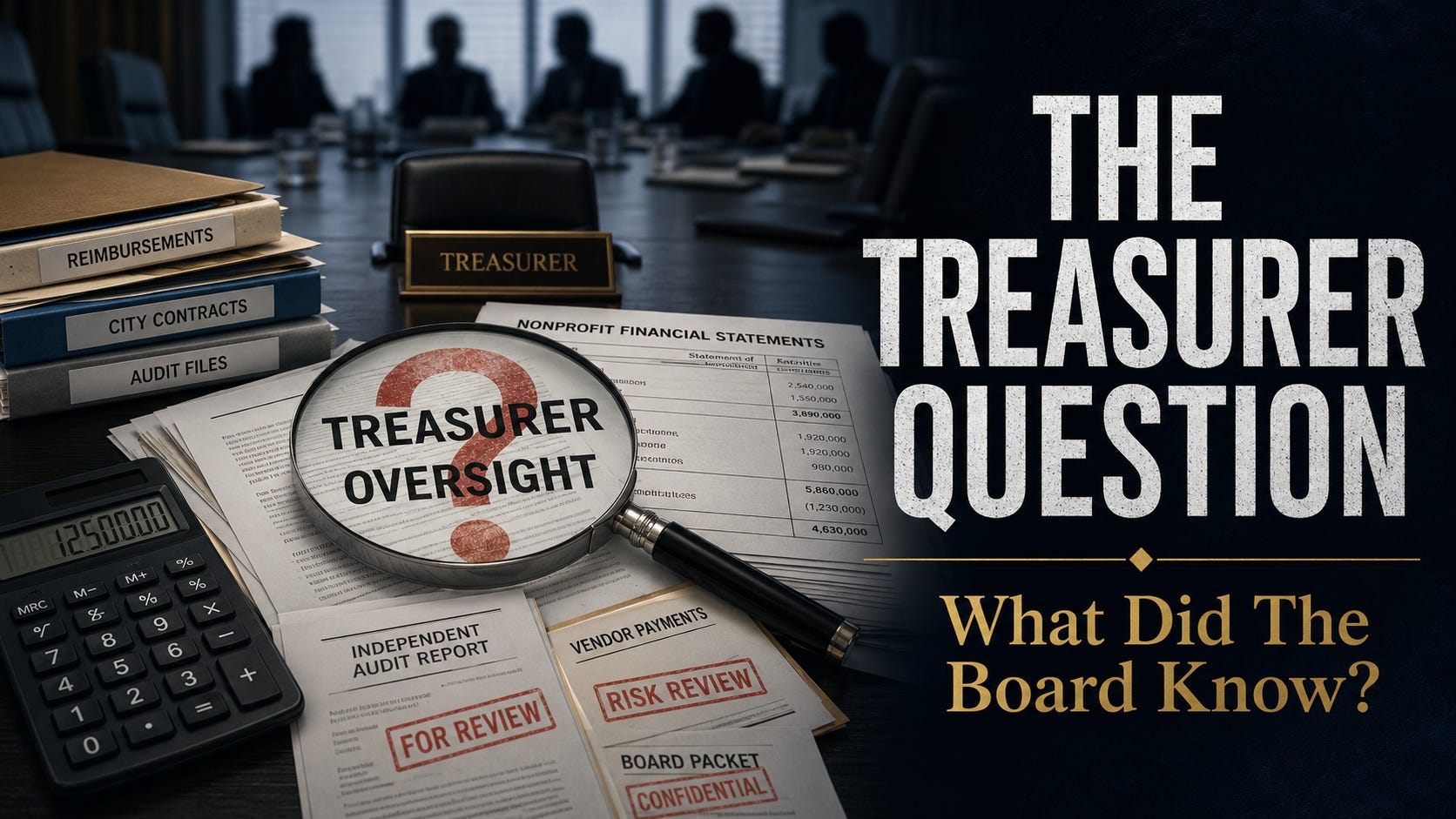
The Treasurer Question
Every governance crisis has a center of gravity.
At BBC, one of the most important questions is this:
What did the board know, and when did it know it?
And specifically:
What did David Roney know?
Roney was not a random observer. He was not an outsider. He was not a passive community member watching from the back row.
He was tied to BBC governance. He served in board leadership. He was connected to financial oversight. And after Joy Johnson was removed, he became part of the leadership structure that took control.
That means the financial condition of BBC cannot be discussed honestly without discussing board responsibility.
If BBC had financial problems, where was the treasurer?
If WOVU was a financial burden, where was the board oversight?
If accounting systems were unclear, who was responsible for demanding clarity?
If contracts, reimbursements, city funding, council allocations, staff payments, and station revenue required stronger internal tracking, why is the blame being directed outward instead of upward?
A board treasurer is not ceremonial.
The role exists because nonprofits must have financial oversight. Boards have fiduciary duties. They are expected to understand risk, monitor financial health, ask difficult questions, require reporting, and protect the organization from instability.
So when BBC now tries to point fingers at Joy Johnson or FCB, the public should ask:
Was the board governing, or was it waiting for a convenient person to blame?
WOVU Was Not a Trophy. It Was a Problem That Needed a Solution.
BBC’s current narrative also attempts to make the WOVU agreement sound suspicious, as if Joy Johnson and Darvio Morrow created a problem where none existed.
But WOVU was already a serious operational issue.
The station had value. It had community meaning. It had cultural importance. But it also carried financial and operational strain. BBC had to decide whether it could continue carrying WOVU under the old model or whether the station needed a different structure, stronger media expertise, broader distribution, underwriting strategy, and professional programming support.
That is where FCB entered the picture.
Darvio Morrow and First Class Broadcasting did not bring a fantasy. They brought media infrastructure, programming strategy, digital distribution capacity, relationships, and a plan to grow WOVU beyond a limited local signal.
Under FCB’s involvement, WOVU saw growth in streaming, listener engagement, programming strength, digital positioning, and public visibility. The station became more than a low-power FM operation struggling under nonprofit limitations. It began moving toward a broader media platform.
That was not damage.
That was progress.
And if BBC accepted FCB’s work, benefited from FCB’s strategy, allowed FCB to help build WOVU’s visibility, and used the value created by that relationship, then BBC should not be allowed to later erase that history simply because the politics changed.
The public should pay close attention to that.
Because when an institution benefits from a partnership, then attacks the partner after the relationship becomes inconvenient, that says something about the institution.
The Missed Answer That Says Everything
The most revealing part of this story may not even be the WOVU agreement.
It may be what happened after FCB and Urban Voice Public Media sued BBC.
BBC was served.
BBC did not timely answer.
FCB and Urban Voice Public Media moved for default judgment.
Then BBC came back and asked the court for leave to respond late.
But BBC’s own explanation raises serious governance questions.
BBC’s filing says the board believed David Roney had an attorney handling the response. It says Roney told the board counsel was handling it. It says later, after Roney was removed, unopened mail addressed to Roney was found — including the default judgment motion and hearing notice.
Read that again.
BBC’s defense for missing a court deadline is essentially that its own internal leadership structure failed to ensure legal mail was opened, counsel was actually responding, and the organization’s interests were being protected.
That is not a Joy Johnson problem.
That is not a Darvio Morrow problem.
That is not a Jerry Primm problem.
That is BBC’s governance problem.
And it is exactly the kind of fact pattern funders, public officials, and community stakeholders should not ignore.
Because if an organization cannot properly manage legal service, litigation deadlines, unopened mail, and internal responsibility during a major lawsuit, what does that say about its readiness to manage public dollars, community assets, and neighborhood trust?
Deflection Is Not Governance
The most troubling part of BBC’s response is not simply that it denies the Amendment.
Organizations can dispute contracts. Boards can argue authority. Parties can litigate.
The deeper problem is the style of the response.
Instead of limiting itself to a clean legal argument, BBC’s counterclaim moves into character attacks and suspicion-building. It attempts to link Joy Johnson, Darvio Morrow, Jerry Primm, FCB, Urban Voice Public Media, and others into a narrative of misconduct.
But suspicion is not evidence.
Friendship is not a business partnership.
Consulting work is not conspiracy.
A strategic introduction is not self-dealing.
Contract enforcement is not malice.
And a board’s regret is not the same thing as illegality.
If BBC had a governance concern, it should have documented it clearly, addressed it timely, and handled it with professionalism. Instead, the counterclaim reads like an attempt to launder internal failure through public accusation.
That is why this story matters.
Because when institutions under pressure turn to deflection, reputations can be damaged. Good people can be smeared. Community trust can be manipulated. And the truth can get buried beneath legal language.
Black Vanguard Media will not allow that to happen here.
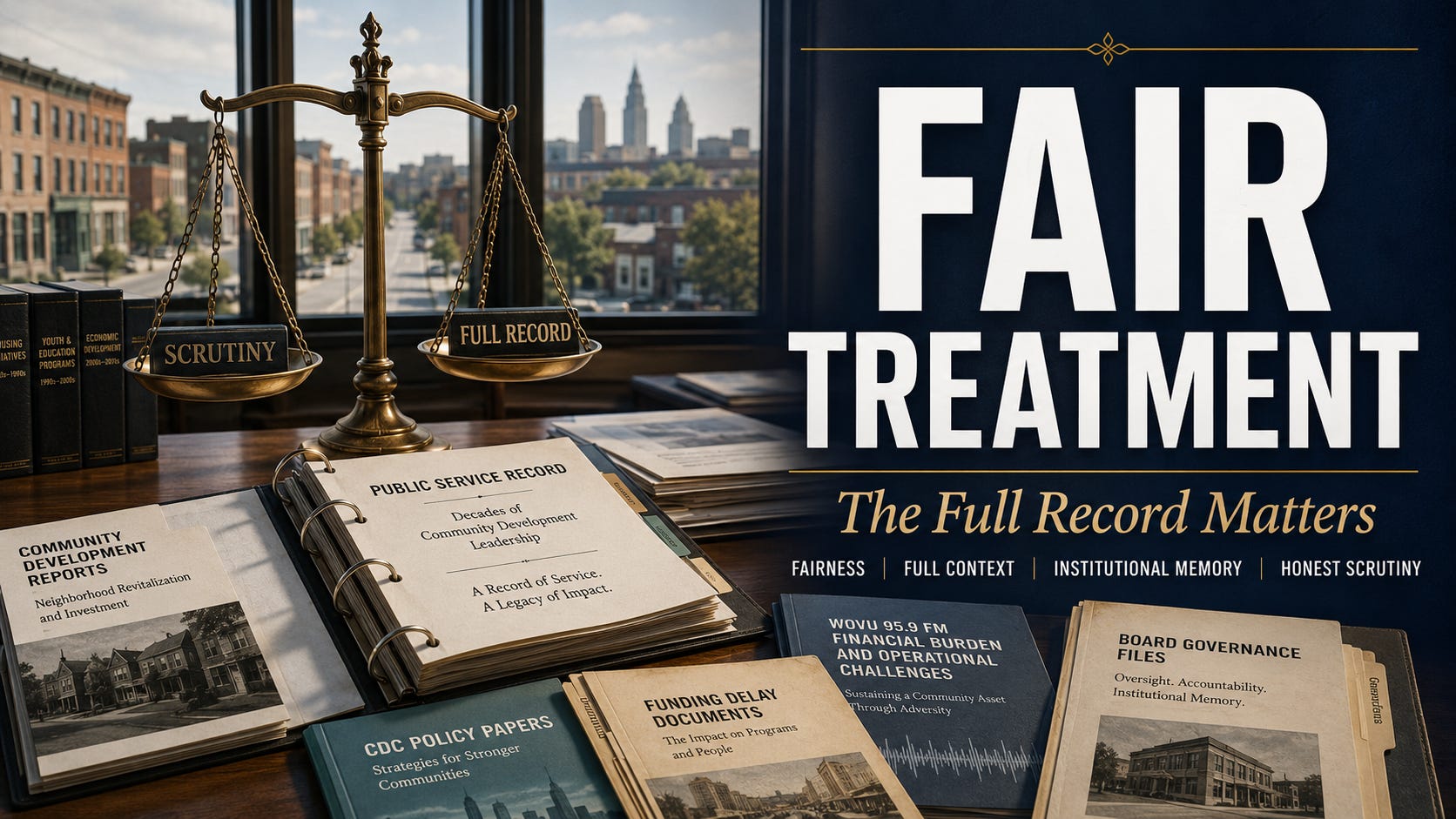
Joy Johnson’s Record Deserves Fair Treatment
Joy Johnson was not an unknown figure parachuting into community development.
She had decades of service. She had institutional knowledge. She had public relationships. She had credibility in the CDC field. She was still respected beyond BBC, including through statewide CDC leadership.
That does not make her immune from scrutiny.
No leader is above questions.
But scrutiny must be honest.
If BBC wants to discuss Joy’s performance, then the full record must be discussed. That includes the broken CDC system she warned about. It includes delayed funding. It includes city reimbursement challenges. It includes WOVU’s financial burden. It includes the board’s own fiduciary responsibility. It includes Roney’s role. It includes the leadership transition. It includes the loss of institutional memory after her removal. It includes what happened once the people criticizing her actually took control.
A fair record does not allow BBC to isolate Joy from the environment she was operating in.
And it certainly does not allow BBC to erase the fact that many of the problems now being used against her were problems she had already identified.
Darvio Morrow and FCB Should Be Judged by the Record
The same is true for Darvio Morrow and FCB.
The record should decide the matter.
Did FCB have an agreement with BBC? Yes.
Was FCB brought in to provide programming, consulting, underwriting, and digital strategy? Yes.
Did FCB help grow WOVU’s reach and visibility? The available reports indicate yes.
Did Darvio communicate with BBC leadership after Joy’s removal? Yes.
Did Darvio provide information to Roney about funding, invoices, staff payment concerns, and WOVU operations? The email record shows that he did.
Did BBC control its own bank accounts, internal accounting systems, and payment systems? The record indicates that WOVU funds flowed through BBC-controlled systems, not FCB-controlled systems.
That matters.
Because BBC’s attempt to blame FCB for financial confusion collapses if BBC controlled the money, the accounts, the books, and the payment process.
A contractor cannot be blamed for failing to control a bank account it did not control.
A media operator cannot be blamed for internal accounting systems it did not administer.
A partner cannot be blamed for unopened legal mail inside BBC.
That is not defense.
That is deflection.
The Public Reckoning
The boardroom breakdown at BBC is now a public matter because BBC’s decisions are no longer contained inside BBC.
They are in court filings.
They are in emails.
They are in public reporting.
They are in funding relationships.
They are in the future of WOVU.
They are in the reputations of people BBC has attempted to implicate.
They are in the trust residents place in community institutions.
And they are in the questions every funder should be asking:
Who was responsible for financial oversight?
Who knew about the risks?
Who ignored the warnings?
Who controlled the money?
Who controlled the payment systems?
Who failed to answer the lawsuit?
Who allowed legal mail to sit unopened?
Who removed Joy Johnson, then blamed her after the organization’s problems deepened?
Who benefited from FCB’s work before trying to discredit FCB?
Who is telling the truth, and who is trying to survive the record?
Those questions do not disappear because BBC files a counterclaim.
They get louder.
This Is Only Part I
This first article is not the entire story.
It is the doorway.
Part II will examine how BBC’s narrative appears to turn Joy Johnson into a scapegoat for a system she had already warned was breaking.
Part III will examine the Roney record — from board finance oversight to executive control to litigation breakdown.
Part IV will examine the WOVU and FCB relationship, including what BBC accepted, what FCB built, and what changed after the dispute escalated.
Part V will examine the counterclaim and how legal language can be used to deflect from institutional responsibility.
Part VI will focus on the people BBC attempted to smear — Joy Johnson, Darvio Morrow, FCB, and Jerry Primm,— and why the record matters more than rumor.
For now, one thing is clear:
BBC’s boardroom crisis is no longer private.
It is public.
And once the record is opened, the community has a right to read it.
The record is now public; if you have information, documentation, or questions that can help the community better understand it, contact Black Vanguard Media at 404-476-7294
I know they miss Tim Tramble