

By the time you see the grant opportunity, the money may have already been moving for months.
A city adopted a new priority.
A corporation announced an investment strategy.
A bank identified communities or issues where it wants to increase its presence.
A foundation changed its focus.
A hospital system identified a community need.
A state or federal agency allocated resources around a particular issue.
Then, eventually, an application appears.
Most organizations enter the conversation at that last step.
They see the opportunity, read the eligibility requirements, check the deadline and start writing.
But organizations that want to build stronger funding strategies should be paying attention much earlier.
Don’t just watch for grants. Watch where the money is moving.
Money Leaves Clues
Capital rarely moves randomly.
There is usually a reason behind it.
Public dollars follow policy priorities. Corporate investments often follow business and community priorities. Banks have markets, customers and community investment goals. Foundations establish strategic focus areas. Healthcare institutions invest in issues connected to health outcomes. Developers look for markets and opportunities.
All of those decisions create signals.
If your city announces a major focus on housing, that is a signal.
If a healthcare system starts talking about food access, maternal health or neighborhood conditions, that is a signal.
If several banks begin investing in the same commercial corridor, that is a signal.
If foundations are increasingly talking about economic mobility instead of individual programs, that is a signal.
If federal or state leaders are repeatedly discussing infrastructure, workforce development, behavioral health, small businesses or another priority, that is a signal.
The question for nonprofit and community development leaders is whether we are paying attention.
Follow the Priority Before You Follow the Application
One of the biggest shifts organizations can make is moving from opportunity tracking to priority tracking.
Opportunity tracking asks:
What can we apply for?
Priority tracking asks:
What are institutions trying to accomplish?
That difference matters.
Imagine that your organization wants to expand a workforce development program.
You could wait for a workforce development grant to appear.
Or you could start looking at what is happening around you.
What industries in your region are growing?
What positions are employers struggling to fill?
What workforce priorities has your city or county identified?
What populations are foundations trying to reach?
What investments are community colleges and universities making?
What economic development projects are coming?
Who has already committed resources to those priorities?
Now you are no longer simply looking for an application.
You are beginning to understand the ecosystem around the money.
And that information can influence everything from how you design your program to who you build relationships with.
Budgets Tell Stories
If you want to understand where money is going, follow budgets.
Budgets are more than spreadsheets. They are statements of priority.
A government can say an issue matters, but its budget tells you how much.
The same is true for corporations, foundations and other institutions. Their investments reveal what they are willing to put resources behind.
For nonprofit leaders, this means funding research cannot begin and end with grant databases.
Pay attention to public budgets.
Capital improvement plans.
Corporate announcements.
Foundation strategic plans.
Bank community investment activity.
Economic development projects.
Major institutional initiatives.
New legislation.
Industry trends.
Those sources can tell you something important:
Where might resources be moving before an opportunity ever lands in your inbox?
The Money May Be Coming From Somewhere You Didn’t Expect
Following the money also forces us to expand our definition of capital.
For many organizations, “funding” has historically meant philanthropy or government grants.
But the resources necessary to accomplish a mission can come from many places.
There may be corporate investment.
Bank financing.
Public incentives.
Tax credits.
Program-related investments.
Earned revenue.
Property or land.
Technical assistance.
Loan guarantees.
Partnerships.
In-kind professional expertise.
And, yes, grants.
A sophisticated capital strategy does not assume every organizational need should be solved with the same type of money.
A $50,000 program expansion and a $5 million real estate project should not have identical funding strategies.
Neither should a startup organization and an institution that has operated for 40 years.
The question isn’t simply, “Where can we get money?”
It is:
“What kind of capital does this particular vision require?”
Follow the Money Backward
Here is an exercise I encourage leaders to try.
The next time you see a major investment announced in your community, don’t just read the headline.
Work backward.
Who funded it?
Who else participated?
Was the funding public, private, philanthropic or some combination?
What priority did the investment address?
Who had to be at the table?
How long was the project developing before the funding was announced?
What relationships probably had to exist for the deal to happen?
You may discover that what looked like one large investment was actually five, six or ten different sources of capital assembled around one vision.
That is especially common in community development.
The announcement might say “$10 million project.”
What it often doesn’t say in the headline is that the $10 million came together through a complicated combination of public investment, financing, philanthropy, organizational equity, tax incentives and partnerships.
Understanding that changes how you think about funding.
You stop looking for the check.
You start thinking about the capital stack.
Relationships Help You See Around Corners
There is another reason following the money matters.
The people closest to capital often know where it is moving before an application is released.
That doesn’t mean there is a secret list of grants available only to people with connections.
It means relationships give you information.
Conversations with bankers can help you understand what financial institutions are prioritizing.
Conversations with elected officials and public-sector leaders can help you understand emerging public priorities.
Conversations with foundations can help you understand how their strategies are evolving.
Conversations with corporate leaders can help you understand where business and community interests intersect.
Those conversations shouldn’t begin when you need a check.
They should be happening while you are building your strategy.
Because sometimes the most valuable thing someone can tell you is not:
“Here’s a grant you should apply for.”
It is:
“Here’s where we see things going.”
Stop Waiting for the Opportunity to Appear
The organizations best positioned for the next funding opportunity may not be the ones that can write the fastest application.
They may be the organizations that saw the opportunity developing before there was an application.
They understood the priority.
They built the relationships.
They clarified their role.
They gathered their data.
They strengthened their partnerships.
They developed the project.
And when the money became available, they were ready.
That is a fundamentally different approach from chasing grants.
It is following the money.
And once you find where the money is going, there is another question you have to answer:
Are you ready for it when it gets there?
That is where we’ll go next.
Where’s the Money?
On Tuesday, October 13 at 11:30 a.m., I’m hosting Where’s the Money?
We’ll take this conversation further—looking at how leaders can think strategically about capital, relationships and organizational readiness instead of simply chasing the next funding opportunity.
Because the question isn’t only:
Where’s the money?
It’s also:
Where is it going—and is your organization positioned to be part of what happens next?
For nonprofit leaders wrestling with these questions, Joy Johnson will continue the conversation on October 13 at MidTown Tech Hive in Cleveland during “Where’s the Money?” — a CEO-level discussion focused on finding capital, positioning for it, and preparing organizations to receive it. Learn more and register here: https://links.myceo360.org/events/beyond-the-grind-2026-10-13
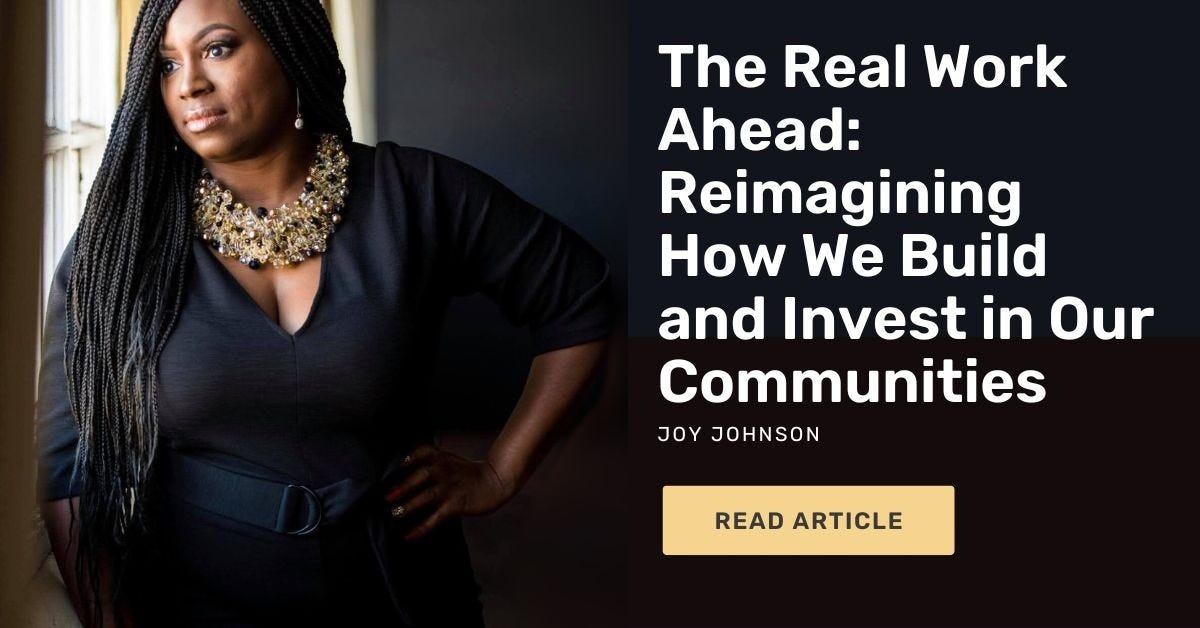
With more than two decades of experience in community development, real estate strategy, and organizational leadership, Joy Johnson brings a seasoned, solutions-focused voice to the field. She is committed to helping communities and institutions avoid systemic pitfalls and build models that truly work. To reach Joy, call (216) 238-2415.