

There’s a quiet shift happening in the capital landscape.
It’s not always announced.
It’s not always written into guidelines.
But you can feel it.
Projects that would have moved forward more easily a few years ago are taking longer.
Decisions are more measured.
And in some cases… opportunities are simply passing by.
Not because the need isn’t there.
But because something else is being evaluated more closely.
What’s Really Being Assessed
In tighter environments, the question isn’t just:
“Is this a good project?”
It becomes:
“Do we feel confident this organization will deliver—clearly, consistently, and without unnecessary risk?”
That’s a different lens.
And it shifts what matters most.
The Currency That’s Rising
When capital becomes more selective, a different kind of value starts to lead:
Trust – Built over time, through consistency and follow-through
Clarity – The ability to communicate vision, structure, and outcomes simply
Execution – A demonstrated ability to move from plan to result
These aren’t new concepts.
But in this environment, they’re becoming decisive factors.
Here’s the Aha
There are organizations doing meaningful work…
With strong ideas…
In communities that need investment…
And still, capital hesitates.
Not because the work lacks value.
But because the level of confidence isn’t fully there yet.
And confidence—more than interest—is what moves decisions forward.
What Confidence Actually Looks Like
Confidence isn’t built through one conversation or one proposal.
It’s built through patterns.
It shows up as:
Consistency in communication
Stakeholders aren’t guessing what’s happening or where things standClarity in structure
Deals are understandable, not overly complex or constantly shiftingEvidence of execution
A track record—even if modest—that shows progress and follow-throughStability in approach
A way of working that feels grounded, not reactive
Why This Matters Right Now
In a more uncertain funding environment:
There is less room for ambiguity
Less appetite for avoidable risk
And more focus on who feels predictable and prepared
That doesn’t mean organizations have to be perfect.
But it does mean they need to feel reliable.
Because reliability reduces perceived risk.
And reduced risk increases the likelihood of capital moving forward.
A Different Way to Think About Readiness
Before your next opportunity, consider:
If someone new reviewed our work, would it feel clear—or complicated?
Do our partners experience us as consistent—or situational?
Can we point to examples of execution—not just intention?
Does our process feel stable—or does it shift with each deal?
If those answers aren’t where you want them to be…
That’s not a limitation.
It’s an area of strength waiting to be developed.
Because This Is the Real Shift
Capital is still available.
But it’s moving with more intention.
Toward organizations that don’t just have ideas…
But demonstrate:
Clarity in what they’re doing
Confidence in how they’re doing it
Consistency in delivering results
Over time, those qualities compound.
And when they do, something changes.
Opportunities don’t just have to be pursued.
They begin to find their way to you.
The Invitation
If you’ve ever felt like:
“We’re doing strong work, but it’s not translating into funding”
“We’re being considered—but not consistently selected”
It may not be about working harder.
It may be about strengthening how your work is experienced from the outside.
And sometimes, that shift comes from stepping back long enough to see how your organization is perceived—through the lens of those making decisions, and what builds their confidence over time.
Because when trust, clarity, and execution are in place…
You don’t just present opportunities.
You become the kind of organization capital is ready to move toward.
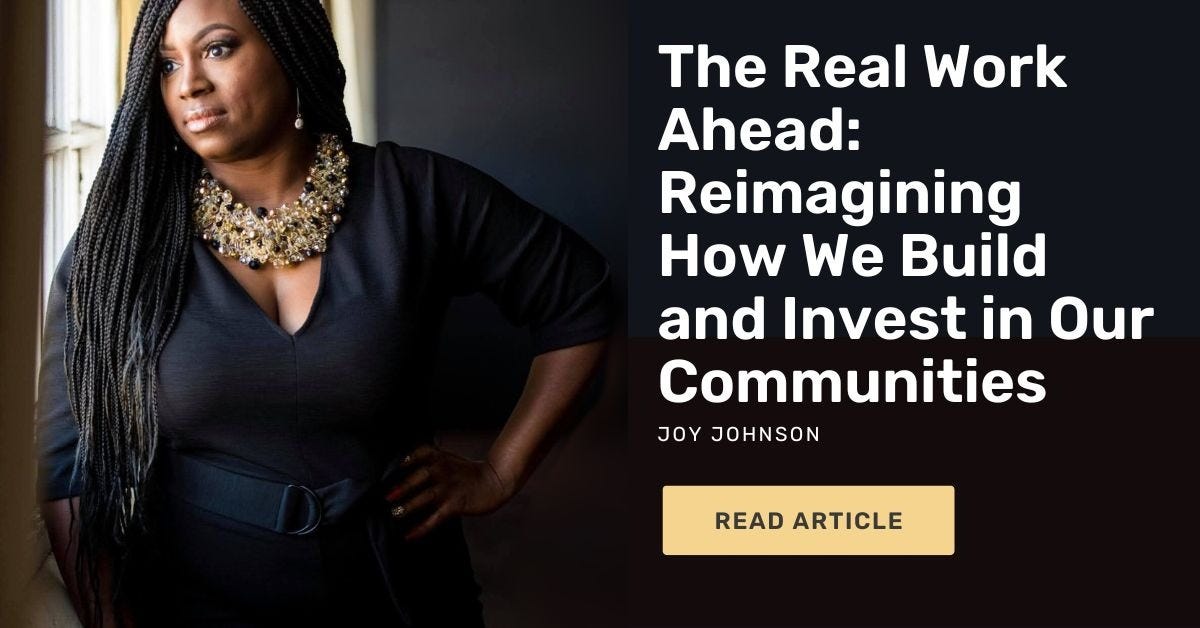
With more than two decades of experience in community development, real estate strategy, and organizational leadership, Joy Johnson brings a seasoned, solutions-focused voice to the field. She is committed to helping communities and institutions avoid systemic pitfalls and build models that truly work. To reach Joy call at (216) 238-2235.