

There’s a quiet truth in the world of capital,one that isn’t written into applications, guidelines, or scoring rubrics:
Most funding decisions don’t start when you submit.
They start long before you ever apply.
And once you see it, you can’t unsee it.
The Moment Most People Miss
In rooms where capital is discussed, before announcements are made, before RFPs are released, before applications open, something else is happening:
Priorities are being shaped
Confidence is being built (or quietly lost)
Narratives are being formed
And, often…
outcomes are beginning to lean in a direction
Not finalized. Not guaranteed.
But leaning.
By the time many organizations hit “submit,” they’re stepping into a process that already has momentum.
And the question is no longer:
“Is this a good project?”
It becomes:
“Does this fit where we were already headed?”
The Difference No One Explains
There are two ways organizations approach capital:
1. The Application Approach
“We have a strong project. Let’s apply and see what happens.”
2. The Alignment Approach
“Let’s make sure the people, priorities, and positioning are already moving in our direction—before anything is submitted.”
Both require effort.
But only one dramatically increases your odds.
What Pre-Alignment Actually Looks Like
Pre-alignment isn’t about gaming the system.
It’s about understanding how decisions are made and showing up early enough to matter.
It looks like:
Conversations before opportunities
Not asking for funding—but understanding what matters most right nowClarity before complexity
Being able to explain your vision in a way that resonates beyond your organizationConsistency before urgency
Showing up more than once, so you’re not a stranger when it countsPositioning before paperwork
Making sure your work fits into the larger goals funders are already pursuing
Here’s the Aha
The strongest applications often don’t “win” because they’re perfect.
They win because they feel familiar.
Because when decision-makers review them, they’re not processing something new…
They’re recognizing something they’ve already seen, heard, or aligned with.
And recognition creates confidence.
And confidence moves capital.
Why This Matters Right Now
We’re in a moment where funding is:
More competitive
More scrutinized
And more intentional than ever before
That means fewer decisions are being made on potential alone.
More are being made on:
Trust
Clarity
Alignment
And those things are not built inside an application.
They’re built before it.
A Different Way to Think About It
Before your next submission, ask a different set of questions:
Who already understands what we’re trying to do?
Who has seen our work more than once?
Where do our goals clearly connect to theirs?
If this application showed up today… would it feel familiar?
If the answer is no…
That’s not a setback.
That’s your opportunity.
Because This Is the Real Shift
The organizations that consistently access capital aren’t just good at applying.
They’re intentional about when they apply, and what’s already in motion when they do.
They understand that:
Capital doesn’t just respond to ideas.
It responds to alignment.
And alignment is something you build—quietly, strategically, and over time.
The Invitation
If you’ve ever felt like:
“We had a strong proposal, but it didn’t land…”
“We’re doing the work, but not seeing the capital…”
It may not be about doing more.
It may be about doing something earlier.
Something more intentional.
Something that shifts the process before it begins.
And sometimes, that shift comes from stepping outside of your day-to-day work long enough to see the process differently, through the lens of someone who understands how these decisions are actually made.
Because once you understand pre-alignment…
You don’t just submit applications.
You walk into decisions that are already starting to lean your way.
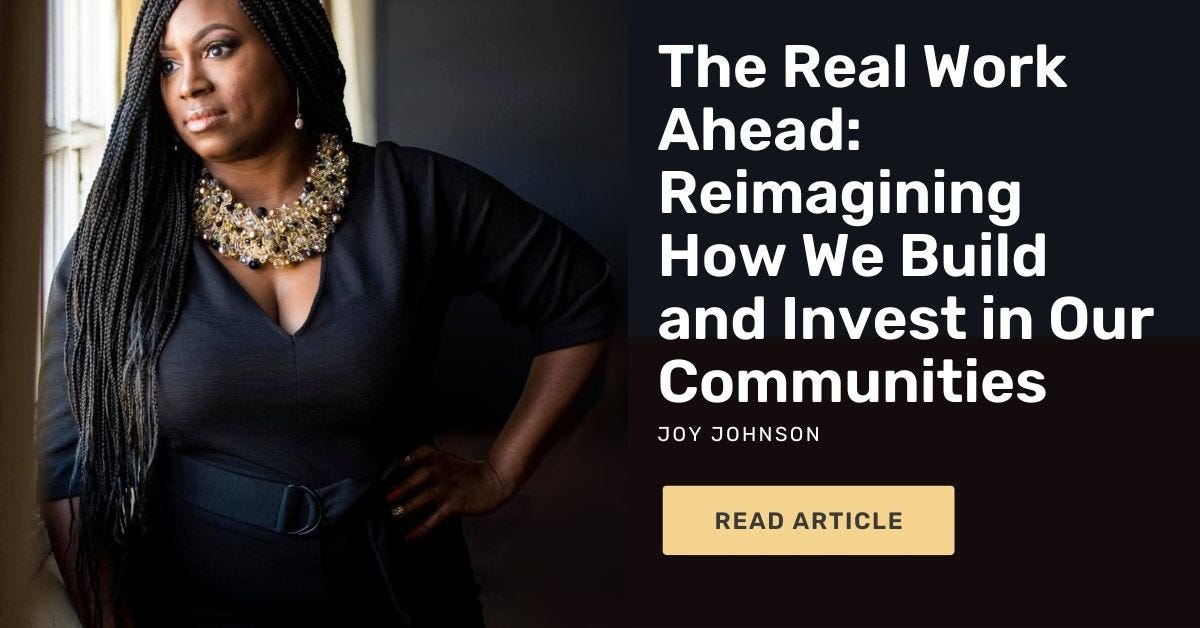
With more than two decades of experience in community development, real estate strategy, and organizational leadership, Joy Johnson brings a seasoned, solutions-focused voice to the field. She is committed to helping communities and institutions avoid systemic pitfalls and build models that truly work. To reach Joy call at (216) 238-2235.