

The Village That Drove Away Its Best Hunter
Innovation Rejected by the Community
Every village wants a great hunter.
Until one shows up.
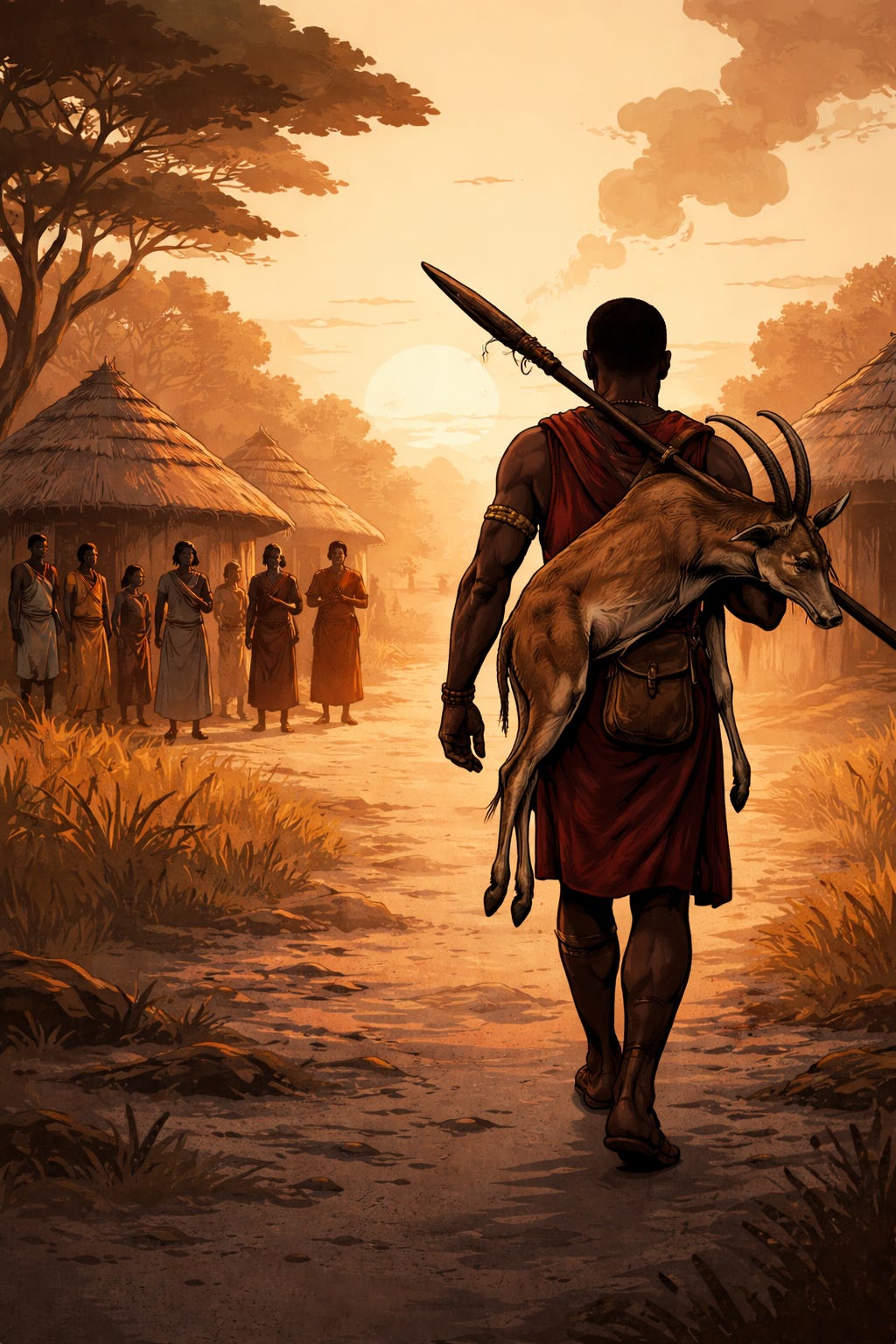
There is an old village story about a group of hunters.
Every morning the hunters left the village and entered the forest with their spears. And every evening they returned through the same narrow path leading back to the fires where the community waited.
Most of them came back with explanations.
The animals were too fast.
The forest had changed.
The weather was bad.
But one hunter came back with meat.
Some days it was antelope. Other days it was wild boar. Occasionally he returned carrying game so large that the entire village gathered to see it.
At first the people celebrated him.
They praised his skill.
They shared the meat he brought.
The children followed him through the village asking about the forest and the animals he had tracked.
For a time, the hunter fed everyone.
But slowly something began to change.
The whispers started.
“No one can be that successful.”
“He must be doing something unfair.”
“Who does he think he is?”
The hunter who once fed the village began to make the other hunters uncomfortable.
Eventually the whispers turned into accusations.
And one day the hunter left the village.
He took his knowledge of the forest, his skill with a spear, and his understanding of the animals with him.
Years later, when the village was hungry again, an elder spoke quietly around the fire.
“Perhaps,” he said,
“the problem was never the hunter.”
The Lesson
Stories like this exist in many cultures because they capture something uncomfortable about human nature.
Communities often celebrate success—until that success begins to reveal something about everyone else.
At that moment admiration can quietly turn into resentment.
Instead of asking:
What can we learn from this person?
People begin asking a different question:
How do we stop them?
The Mirror
Over the years I’ve spent time around community leaders, institutions, and organizations across our communities. One thing I’ve learned is that many of our challenges are not about talent or opportunity.
Often, they are about how we respond to success, change, and new ideas.
Across the Black community there are always individuals trying new approaches.
New business models.
New leadership ideas.
New ways of organizing opportunity.
Sometimes those ideas work.
And when they do, the community faces a choice.
One response is curiosity.
“What are they doing differently?”
“How can we learn from it?”
Communities that ask those questions tend to grow.
The other response is suspicion.
“Who do they think they are?”
“Why are they doing things differently?”
And if we are honest, this is not something done by outsiders to us.
Sometimes it is something we do to ourselves.
Communities that fall into that pattern often stay exactly where they are.
Because progress almost never comes from repeating the past.
It usually begins with someone willing to try something different.
The Question
The real test of leadership inside any community is not how it treats failure.
It is how it treats success.
Do we learn from it?
Or do we push it away?
Because history teaches a simple lesson:
A village that drives away its best hunters will eventually find itself hungry.
So the question for the village is simple:
What kind of village do we want to be?
Jerry Primm
Founder, Black Vanguard Media
Black Vanguard Media is dedicated to exploring ideas that strengthen the Black community through leadership, economic understanding, and thoughtful dialogue.