

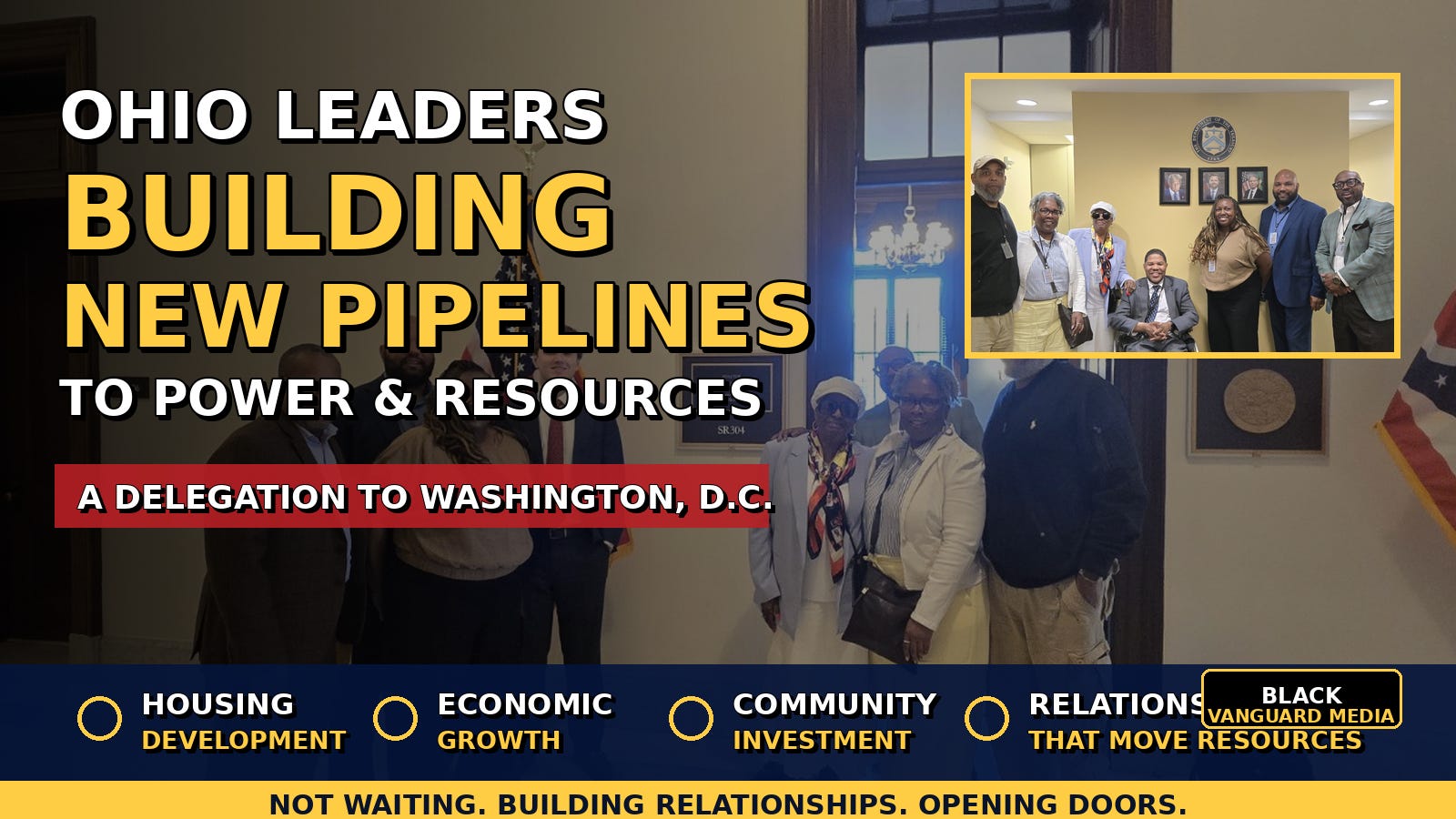
There is an old saying that opportunities rarely come to those who wait. More often, they come to those who prepare.
That philosophy was on full display as a delegation of community development leaders from across Ohio traveled to Washington, D.C., not to ask for favors, but to better understand the federal tools, relationships, and investment strategies that can help transform historically underserved communities throughout the state.
The trip was not political. It was strategic.
It was an intentional effort to learn how communities can better position themselves for housing development, economic development, commercial corridor revitalization, community investment, and long-term access to capital.
Among those participating was Cleveland Councilman Joe Jones, who joined leaders from multiple regions of Ohio in demonstrating that effective leadership often begins long before funding applications are submitted. It begins by building relationships, understanding how systems work, and engaging the people responsible for administering them.
Building Relationships Before They’re Needed
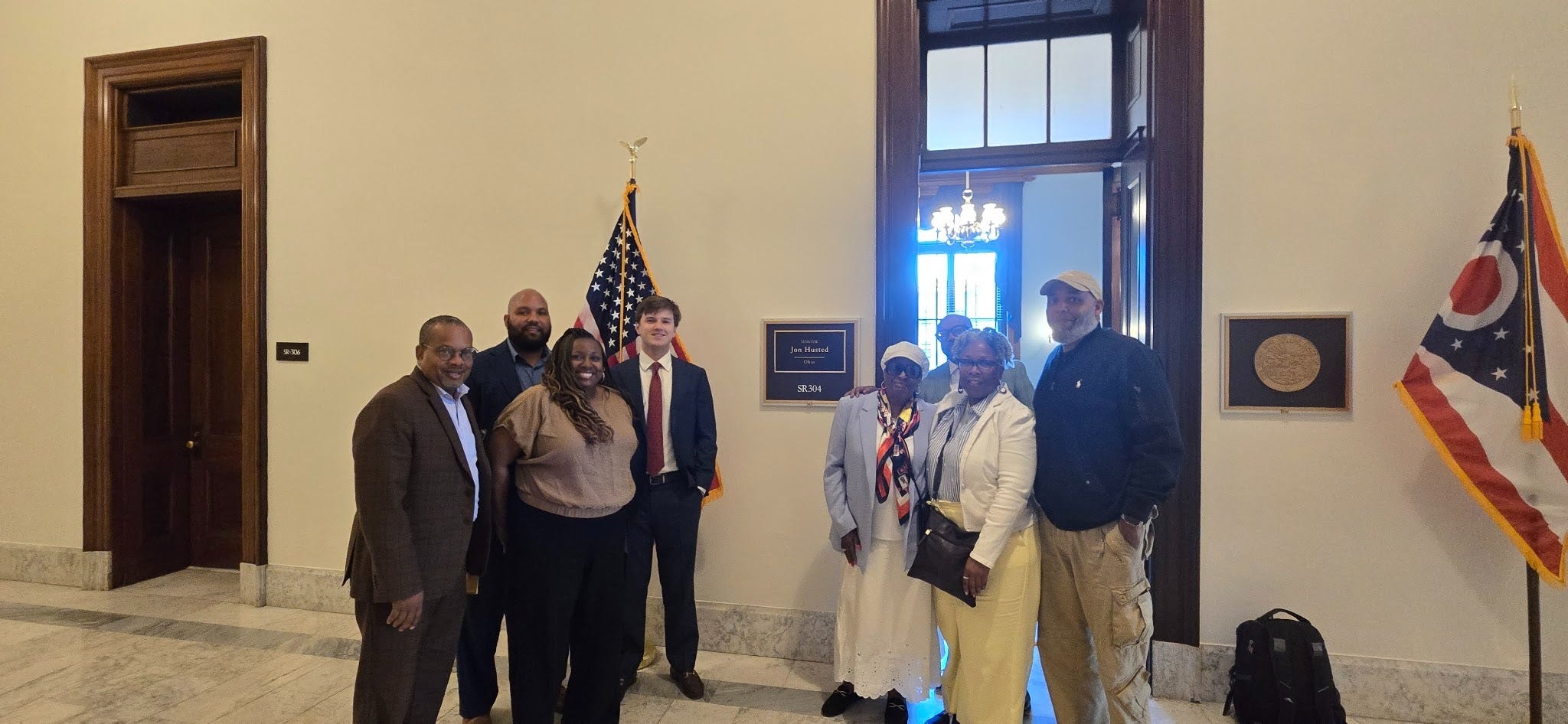
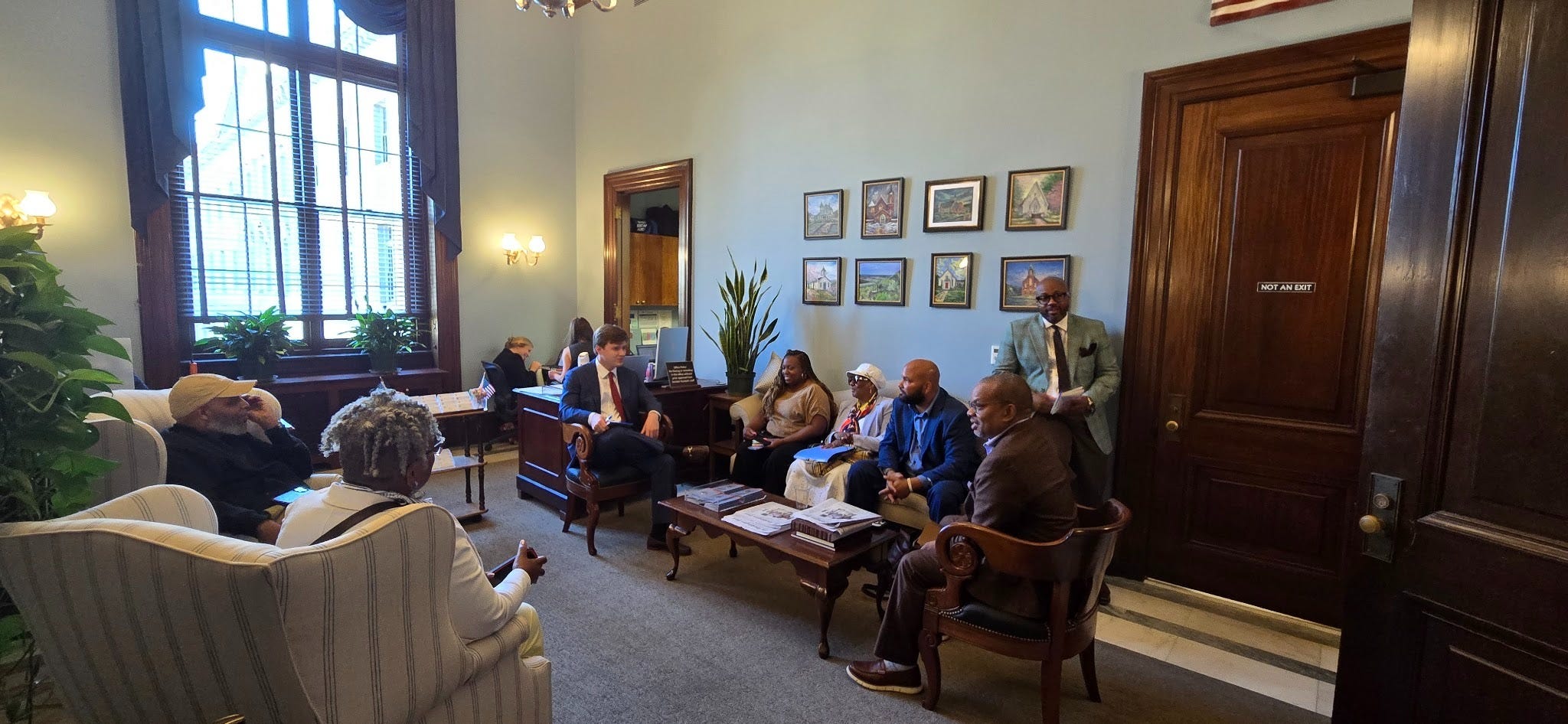
One of the delegation’s first meetings was with Jack Haney, Legislative Aide for Community Development in Senator John Husted’s office.
Rather than focusing on politics, the discussion centered on community development, housing priorities, and how local leaders can build stronger working relationships with Ohio-based members of the Senator’s team. The conversation reinforced an important lesson that applies far beyond Washington: meaningful partnerships are built over time, not only when funding is being requested.
That matters because federal offices cannot advocate effectively for communities they do not know. Likewise, communities cannot fully leverage opportunities they do not understand.
Meetings like these help close the gap between local need and federal opportunity.
They create familiarity, establish credibility, and open lines of communication that can prove valuable long after the meeting itself has ended. They also show that constructive engagement with federal offices does not have to be partisan. It can be practical, professional, and rooted in community benefit.
Learning Directly from Treasury and the CDFI Fund
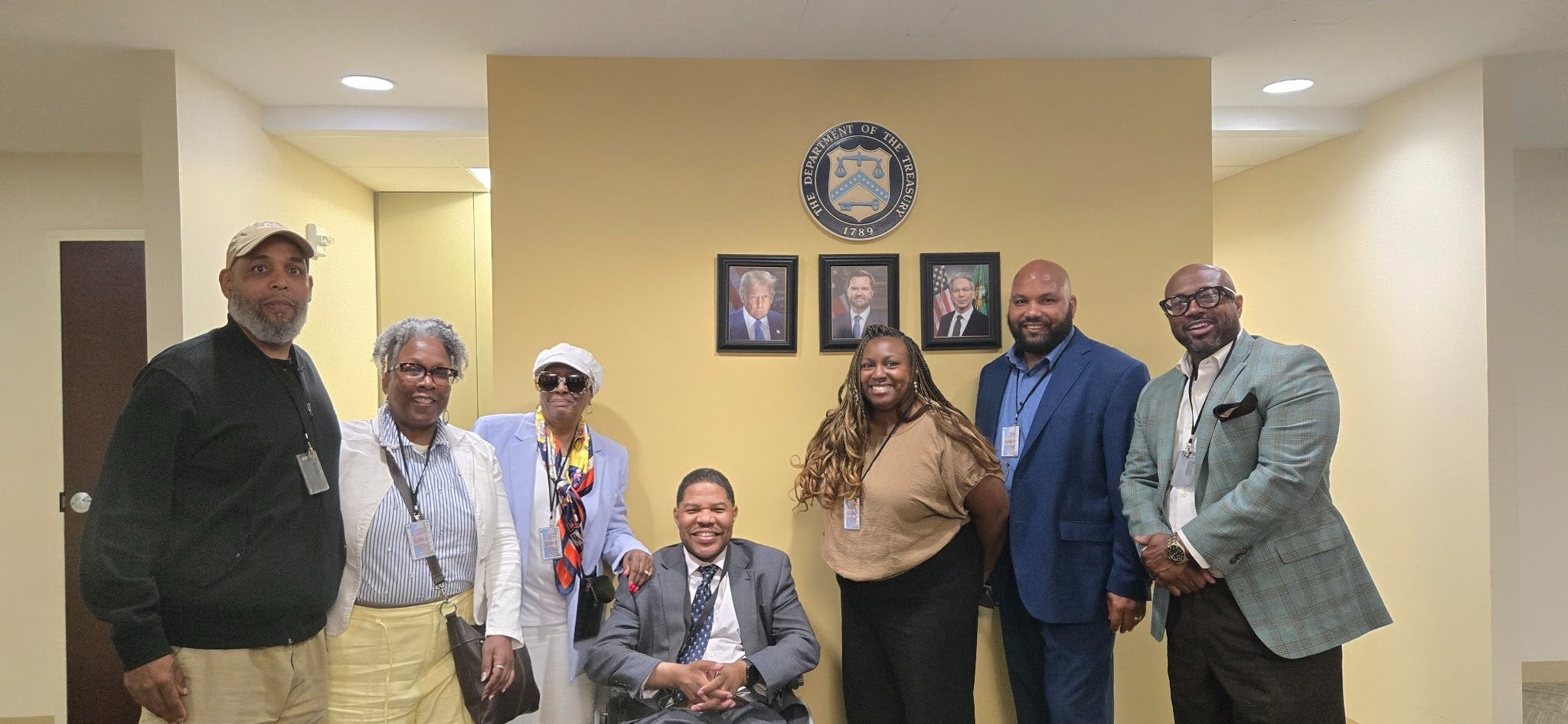
The delegation also met with Shafron “Shay” Hawkins, Senior Advisor, U.S. Department of the Treasury, Office of Community and Economic Development.
The discussion focused on the federal tools that increasingly shape neighborhood investment across America, including Community Development Financial Institutions, Community Development Entities, New Markets Tax Credits, Opportunity Zones, and other financing mechanisms that can help communities move beyond traditional grant funding.
The delegation also received additional guidance from Andrew Schlack, Program Manager for the Capital Magnet Fund. His insights helped connect the larger federal conversation to practical implementation: how organizations can think about affordable housing finance, project readiness, eligible uses, partnerships with CDFIs and nonprofits, and the kinds of predevelopment work that can determine whether a project is ready to move forward.
Need may open the conversation, but readiness is what moves investment.
For many community-based organizations, these programs remain unfamiliar. Yet they represent some of the most significant tools available for affordable housing, commercial development, neighborhood stabilization, veterans housing, and community revitalization.
Learning directly from federal professionals allows communities to better understand not only what resources exist, but what it takes to become prepared for them.
The Bigger Story
It would be easy to view this trip simply as another visit to Washington. That would miss the point entirely.
The real story is that leaders from across Ohio chose not to wait for someone else to create opportunity. They went looking for it. They sought information. They developed relationships. They asked thoughtful questions. They listened. They built connections that can continue long after the meetings ended.
Perhaps most importantly, they recognized that community development today requires fluency in systems that extend well beyond city limits: housing policy, federal tax incentives, community finance, economic development, capital formation, and neighborhood investment.
Relationships Are Infrastructure
Too often, conversations about infrastructure focus only on roads, bridges, and buildings. Those investments matter. But relationships are infrastructure too.
Relationships determine who answers the phone. Relationships determine who shares information. Relationships determine who remembers your community when new opportunities emerge.
The strongest communities are rarely the ones with the greatest needs. They are often the ones with the strongest relationships.
Communities do not build influence by waiting to be invited into the conversation. They build influence by showing up.
A Model Worth Expanding
Councilman Joe Jones’ participation reflected something larger than one city or one neighborhood. It reflected a growing understanding that communities cannot afford to remain disconnected from the institutions shaping economic opportunity.
The delegation included representatives from communities across Ohio, each bringing different experiences but sharing a common objective: learning how to create stronger pathways between local neighborhoods and federal resources.
This was not about party labels. It was about public purpose. It was about preparing communities to compete. It was about ensuring that neighborhoods with tremendous potential are equipped with the knowledge, relationships, and strategic understanding necessary to attract investment.
The Invitation
Perhaps the most encouraging takeaway from the trip is that this work is not reserved for a select few.
Every city has emerging developers. Every community has nonprofit leaders. Every region has business professionals. Every neighborhood has stakeholders who want to make a difference.
The question is whether they are willing to invest in learning how the system works.
Those who continue waiting for opportunities may always find themselves reacting. Those who build relationships, seek knowledge, and engage with institutions before they need assistance will be far better positioned when opportunities arise.
That may be the greatest lesson from Ohio’s recent delegation to Washington.
Communities do not build influence by waiting to be invited into the conversation. They build influence by showing up. By learning. By listening. By building relationships. And by creating new pipelines to the knowledge, capital, and partnerships that help communities move forward.
Because the future belongs to communities that don’t simply hope for investment — they prepare for it.
For additional information about this initiative or to learn how to participate in future delegations, contact CEO 360, Inc. at (216) 255-4354.
Great article glad to hear Councilman Jones went hopefully he learn something to bring back to Harvard. Thanks for sharing.