

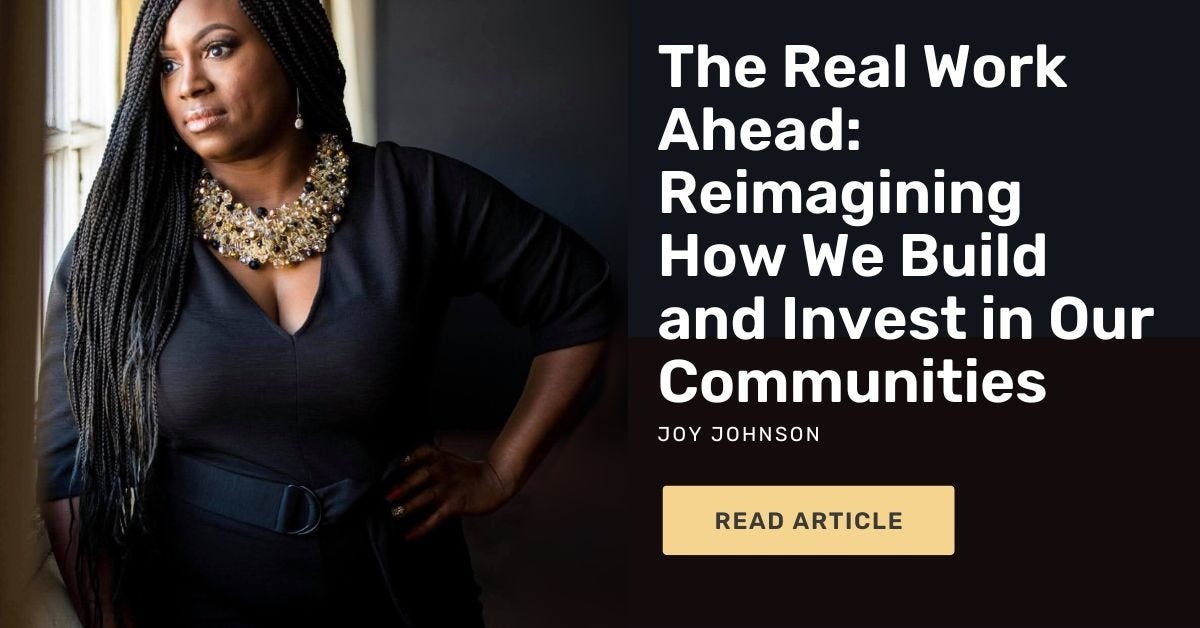
Last week, I joined a delegation of Ohio community development leaders for meetings in Washington, D.C. We met with representatives from Senator Jon Husted’s office and leaders connected to the U.S. Treasury’s Community Development Financial Institutions (CDFI) Fund.
Like many trips to Washington, there were meetings, presentations, and discussions about resources. But what stayed with me most was something much simpler: the realization that access is often closer than we think.
The purpose of our trip was straightforward. We wanted to establish meaningful relationships between Ohio-based community development organizations and federal partners. We wanted local leaders to see that agencies like the U.S. Treasury are not distant institutions operating beyond our reach. They are made up of people who want to understand what is happening in communities and who need to hear directly from those doing the work.
At the same time, we wanted federal officials to meet a group of Ohio practitioners who were willing to move beyond the noise that often dominates public discourse. We were not there to debate politics. We were there to discuss neighborhoods, housing, entrepreneurship, workforce development, community investment, and the challenges facing residents in cities and towns across Ohio.
What we found was a genuine willingness to engage.
Nobody asked about political affiliation. Nobody questioned why we were there. Instead, they listened. They asked thoughtful questions. They shared information. Most importantly, they offered connections to additional resources and relationships that could help strengthen the work happening in our communities.
For me, one of the most important outcomes of the trip was demonstrating to community development leaders that they should think bigger than the opportunities immediately available at the county or municipal level.
Local partnerships matter. State relationships matter. But there is an entire ecosystem of federal resources, technical assistance providers, financing tools, and policy experts that many organizations never explore because they assume those opportunities are out of reach.
They are not.
The federal government is more accessible than many people realize. The challenge is not access. The challenge is making the decision to engage.
One of the most unexpected outcomes of the trip had nothing to do with Washington itself.
It happened within the delegation.
Some members of our group were meeting one another for the first time. They came from different cities, different organizations, and different areas of expertise. Yet as the meetings unfolded, something became clear: we were stronger together than any of us would have been alone.
By the end of the day, there was a noticeable shift in energy. People felt heard. People felt valued. People felt respected. Most importantly, they felt empowered.
The trip also revealed opportunities for future collaboration among delegation members themselves. What started as a trip to Washington became the beginning of new partnerships across Ohio.
Our meeting with Shay Hawkins at the U.S. Treasury’s CDFI Fund provided another important lesson—one that may reshape how many community development organizations think about capital.
One of the most valuable takeaways was the role of Community Development Entities (CDEs) in the New Markets Tax Credit program. While tax credits often receive the attention because of the capital they unlock, CDEs play a critical role in determining which projects move forward. They evaluate community impact, assess alignment with program goals, and help ensure that investments reach the populations and neighborhoods they were designed to serve.
For many in our delegation, it was a reminder that communities should not only focus on accessing capital but also on understanding how capital decisions are made.
Our meeting with Senator Husted’s office reinforced another important lesson: the future of housing policy is being shaped right now.
One of the most significant discussions centered on the 21st Century Road to Housing Act, legislation designed to address the nation’s housing shortage by encouraging the creation of millions of housing units through a variety of strategies. The conversation was a reminder that many of the tools local organizations rely upon are created through policy decisions made far beyond city hall.
If community development leaders want policies that reflect the realities of their neighborhoods, they must be willing to engage in those conversations before decisions are finalized.
That may be the most important lesson from our trip.
Too often, organizations begin building relationships only when they need something—a grant, an appropriation, a funding opportunity, or a letter of support. By then, it may be too late.
The strongest relationships are built before opportunities emerge.
They are built through conversations, shared learning, mutual respect, and a genuine commitment to understanding one another’s goals.
The organizations represented on this trip did not travel to Washington because a funding announcement had been released. We traveled to build relationships, deepen our understanding, and create connections that may benefit our communities for years to come.
In community development, relationships are not a byproduct of the work.
They are the work.
And when we invest in those relationships before opportunities emerge, we position our communities to recognize and seize opportunities when they arrive.
With more than two decades of experience in community development, real estate strategy, and organizational leadership, Joy Johnson brings a seasoned, solutions-focused voice to the field. She is committed to helping communities and institutions avoid systemic pitfalls and build models that truly work. To reach Joy call (216) 238-2235.