

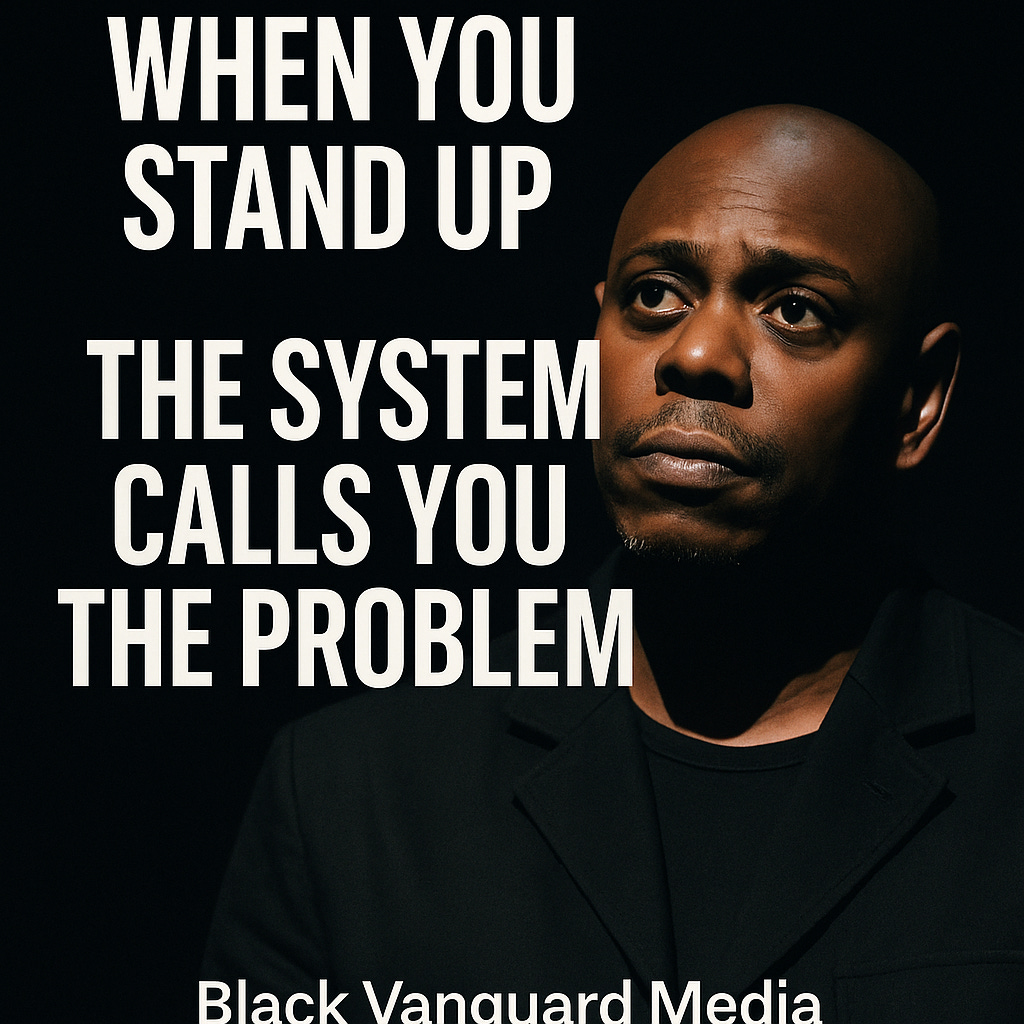
There’s a moment every Black creator, professional, or leader eventually faces.
It’s the moment you stop playing your assigned role.
And the system looks back at you—not confused, not curious—but offended.
That moment happened to Dave Chappelle long before Instagram videos and Netflix specials. It happened the day he walked away from $50 million.
The establishment didn’t ask why.
They didn’t ask what was wrong with the deal.
They asked what was wrong with him.
The Price of Not Knowing Your Place
Comedy Central didn’t invent exploitation.
They perfected it.
Dave Chappelle signed a contract early in his career—one that paid him a salary but stripped him of ownership. No control over DVDs. No say in syndication. No rights to streaming. His work made millions. He received none of it beyond his check.
Legally clean. Morally bankrupt.
When he refused to keep producing content he didn’t own—even when the offer jumped to $50 million—the narrative flipped overnight.
Suddenly:
He was “unstable.”
He was “ungratefu.l”
He was “self-destructive”
He was “throwing it all away.”
This is the oldest trick in the book.
When Black people refuse unfair terms, the system reframes the refusal as a character flaw.
The Establishment Doesn’t Call You Difficult Until You Stop Being Useful
HBO once told Chappelle, “What do we need you for?”
Years later, the same industry streamed his show across multiple platforms—without permission, without payment—while he rebuilt his career from scratch.
That’s the contradiction Black creators know well:
They don’t need you… until they’re still profiting from you long after you’ve left.
And when you speak up? You’re labeled the problem.
Not the contract. Not the exploitation. Not the imbalance.
You.
Ownership Changes Everything
Dave Chappelle didn’t win because he yelled. He didn’t win because he sued. He didn’t win because he begged.
He won because he built leverage outside the system that exploited him.
Netflix didn’t just offer him money. They offered him control.
Ownership. Respect. A direct relationship with his audience.
And when Comedy Central licensed Chappelle’s Show to Netflix and HBO Max without telling him—without paying him—Dave did something revolutionary.
He told the truth.
Quietly. Calmly. Directly.
And then he asked his fans to do the unthinkable:
Stop watching his own show.
When You Refuse to Be Consumed, the System Panics
That Instagram video wasn’t emotional. It was strategic.
Dave wasn’t canceling anyone. He was exposing the dependency.
Because without the audience— without attention— without participation—
The product is worthless.
And when people listened? When viewership collapsed? When Netflix pulled the show?
Suddenly, the same establishment that ignored him for 15 years wanted to talk.
That’s not a coincidence.
That’s power shifting.
The Real Warning for Black Professionals and Creators
Here’s what Dave Chappelle’s story teaches—especially to Black founders, artists, executives, and disruptors:
If you challenge unfair systems, they will try to discredit you
If you prioritize ownership over approval, they will call you difficult
If you walk away from bad deals, they will say you’re irrational
If you demand justice after signing an unjust agreement, they will hide behind legality
But legality is not morality. And silence is not peace.
Standing Up Will Cost You—Before It Pays You
Dave Chappelle lost years. He lost money. He lost reputation—temporarily.
But what he refused to lose was himself.
And in the end? He got his name back. His license back. His dignity back. And yes—his money.
Not because the system had a change of heart. But because he forced a reckoning.
The Black Vanguard Lesson
If you’re being painted as the problem for demanding fairness, you’re probably doing something right.
If former employers suddenly question your sanity, loyalty, or professionalism the moment you assert boundaries— pay attention.
And if standing up for what’s right makes you uncomfortable, isolated, or misunderstood?
Good.
That’s usually the first sign that ownership—and freedom—are within reach.