

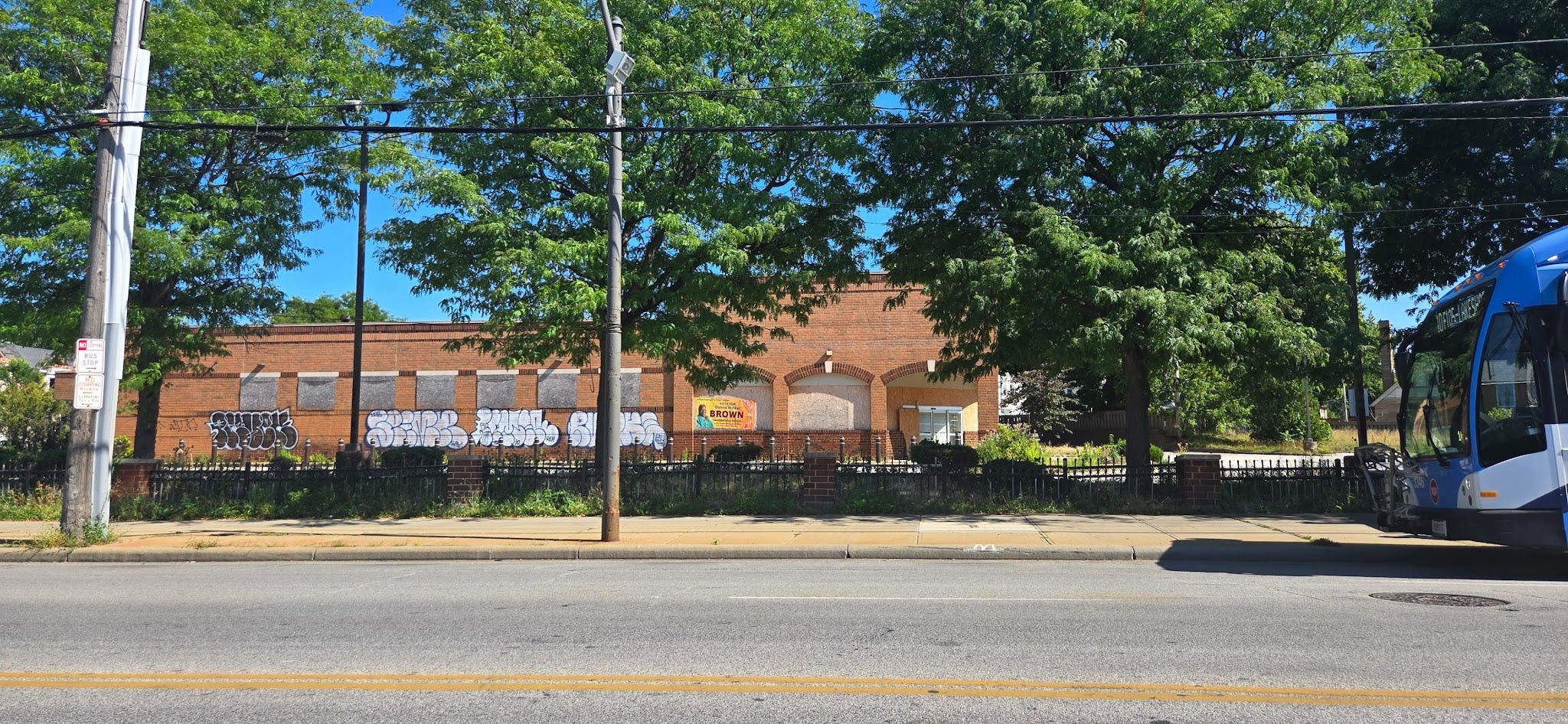
When Walgreens announced it would close its Lee-Harvard location, many people understandably focused on the company’s explanation: theft and shrinking profits. Those are real business concerns, and every private company has to make difficult financial decisions.
But there is another story unfolding—one that deserves just as much attention.
This is not simply the story of a store closing. It is the story of what happens when an essential service disappears from a neighborhood.
For many residents of Lee-Harvard, especially older adults, people living with chronic illnesses, caregivers, and families without reliable transportation, a neighborhood pharmacy is part of the community’s healthcare infrastructure. It is where prescriptions are filled after a doctor’s visit, vaccinations are received, questions are answered by a trusted pharmacist, and medications are picked up without traveling across town.
When that pharmacy closes, the impact extends far beyond retail.
Local leaders have indicated that the closure came as a surprise. After the announcement, assistance was reportedly offered, including enhanced public safety measures and additional surveillance. Regardless of whether those efforts could have changed the outcome, the larger issue remains: what happens to the neighborhood now?
Public health researchers use the term “pharmacy desert” to describe communities where residents have limited access to pharmacy services. Studies have found that pharmacy closures disproportionately affect Black and Latino neighborhoods, creating additional barriers to healthcare for populations that often experience higher rates of chronic disease.
That should concern all of us.
For decades, communities celebrated attracting national retailers. New pharmacies and national chains represented investment, jobs, and convenience. Many delivered on those promises. Yet another, less visible, change also occurred. As national chains expanded, many independently owned pharmacies and neighborhood retailers disappeared. Local ownership declined, and communities became increasingly dependent on businesses whose long-term decisions would ultimately be made far from the neighborhoods they served.
When corporate priorities change, communities are left asking a difficult question: Who replaces an essential service after it is gone?
This article is not about assigning blame. Walgreens has the right to make business decisions, just as every private company does. The real question is whether our communities have built enough resilience to withstand those decisions when they occur.
Economic development cannot be measured only by ribbon cuttings. It must also be measured by what remains after the ribbon is gone.
If the loss of a single pharmacy can leave an entire neighborhood searching for medications, transportation, and basic healthcare access, then the issue is larger than one company. It is about the strength—or weakness—of the local ecosystem.
Perhaps the most important lesson from Lee-Harvard is this: communities don’t become pharmacy deserts the day a pharmacy closes. They become vulnerable years earlier, when they lose the local businesses, local ownership, and local capacity to replace essential services.
This is the first article in Black Vanguard Media’s special series, “Who Owns Our Neighborhoods?” In the weeks ahead, we will examine how communities arrived at this point, what role capital and ownership have played, and—most importantly—what practical steps can help neighborhoods build the resilience needed to protect essential services for generations to come.
Questions Worth Asking
Who owns the essential services in your neighborhood?
If your local pharmacy closed tomorrow, who would replace it?
Should economic development be measured only by attraction, or also by resilience?
What would it take for communities to preserve or replace essential services when market conditions change?