

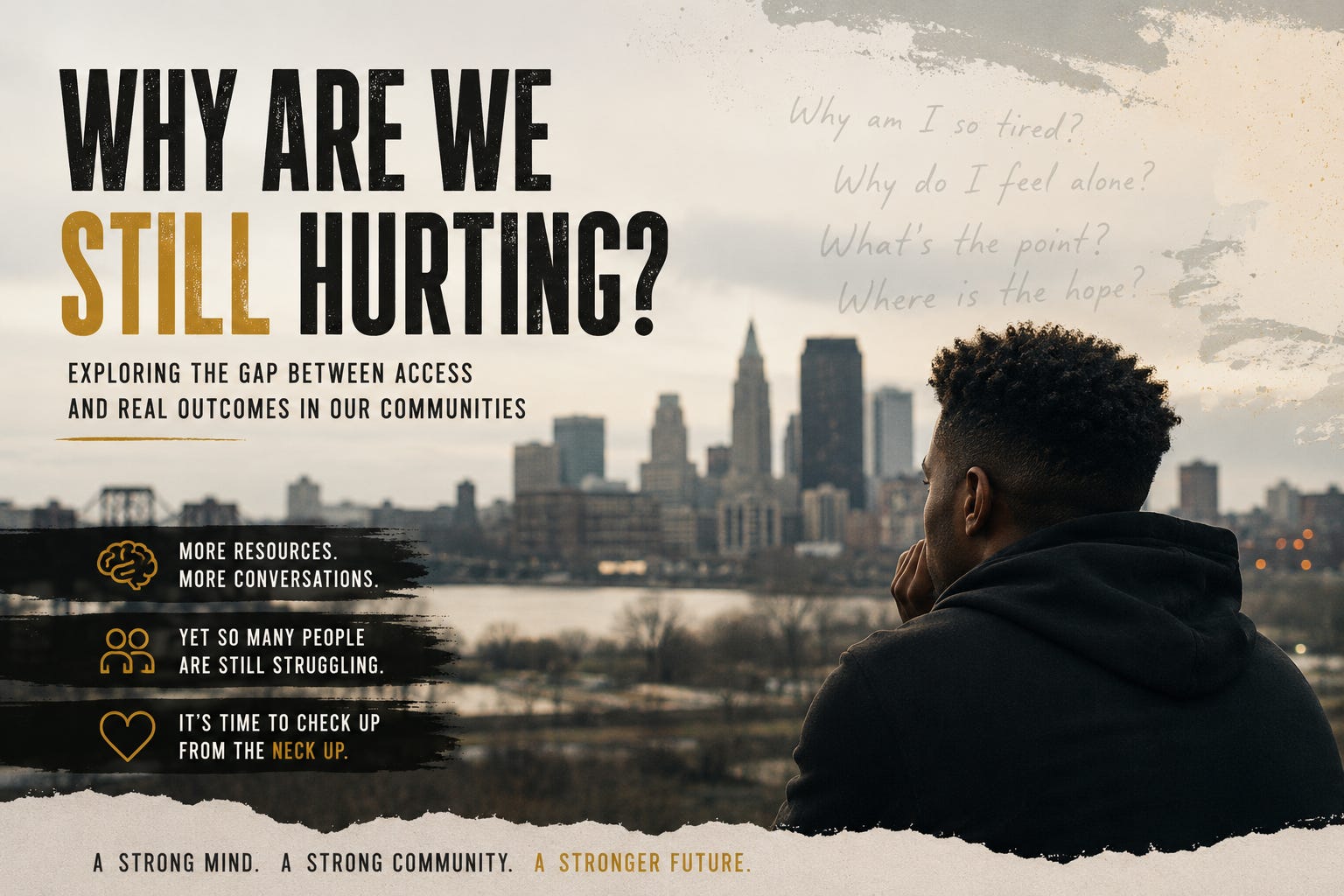
Lately, there’s been a question sitting quietly in the back of a lot of people’s minds: if we have more access to resources, more conversations about mental health, more programs, and more information than ever before, why do so many people still feel overwhelmed?
Because if we are being honest, a lot of people are not okay right now.
People are tired in a way that sleep does not fix. Parents are stretched thin trying to balance work, finances, and family responsibilities. Young people are anxious about the future and the pressure to constantly perform, succeed, and keep up. Families are carrying stress quietly behind closed doors, often without knowing how to talk about it openly.
Even though mental health conversations have become more common in recent years, many people still feel like they are carrying everything on their own. Part of the problem may be that access and outcomes are not the same thing.
Just because resources exist does not automatically mean people feel supported, connected, or emotionally healthy. A city can have hospitals and still have unhealthy people. A neighborhood can have programs and still feel disconnected. A person can be surrounded by others every day and still feel completely alone.
Resources matter. But resources alone cannot replace stability, trust, community, or genuine human connection, and in many ways, we have become more connected to the world while simultaneously becoming more disconnected from each other.
People can post every part of their lives online while privately dealing with anxiety, burnout, loneliness, or emotional exhaustion they do not know how to talk about. Sometimes those struggles are obvious, but often they are not. Sometimes, emotional fatigue simply looks like someone becoming quieter over time. More distant. Less patient. Less hopeful.
At the same time, the pressure people are carrying every day is very real.
Financial stress. Work responsibilities. Family obligations. Constant exposure to bad news. Social media comparison. Violence. Uncertainty about the future. The feeling that you always have to keep moving, even when you are exhausted.
For many people, life has quietly shifted from living to simply surviving.
And in many communities, especially those that have endured hardship for generations, people were taught that strength meant pushing through no matter what. Keep moving. Handle it yourself. Do not complain. Do not let people see you struggling.
That mentality helped many families survive difficult times. But silence has consequences too.
Eventually, the things people refuse to deal with emotionally begin to show up elsewhere — in relationships, in parenting, in anger, in isolation, and in how people treat themselves and others.
That is why conversations around mental health matter, even when they are uncomfortable.
A real “Check Up From The Neck Up” is not only about therapy or crisis intervention. Sometimes it begins with slowing down long enough to honestly ask yourself whether you are okay. It also means checking in on the people around you and creating environments where others feel safe enough to be honest about what they are carrying.
Because the truth is, many people are carrying far more than they let others see.
Some are carrying grief. Some are carrying disappointment. Some are carrying fear about the future. Others are carrying years of exhaustion without ever giving themselves permission to say it out loud.
And maybe that is the shift we need to make moving forward.
Not just creating more resources, but rebuilding the kind of communities where people no longer feel like they have to carry everything alone.